Gutters collect water from your roof, but downspouts are the exit points that move that water safely to the ground and away from your foundation. When there are not enough downspouts on a home, the entire gutter system becomes overwhelmed. Water backs up, spills over the edges, and pools right where it causes the most damage. For homeowners in Portland and across the Oregon metro area, where annual rainfall often exceeds 40 inches, having the right number of downspouts is not optional. It is essential to protecting your property.
Many homes are built with the minimum number of downspouts required by code. That can work fine in drier climates, but Oregon's sustained rainy season puts extra pressure on gutter systems. If your gutters are overflowing even though they are clean and in good condition, the problem is likely not the gutters themselves. You probably need more downspouts.
Warning Signs You Need Additional Downspouts
The most obvious sign is water spilling over the edges of your gutters during a storm. If you see a waterfall effect at the corners or at the midpoint of a long gutter run, that section of gutter is handling more volume than the existing downspouts can drain. Pay close attention during a heavy rain. Walk the perimeter of your home and note where water is escaping the gutter channel.
Other signs that your home needs more downspouts include:
- Water pooling near the foundation after a rain, especially in areas that sit between existing downspouts
- Splash marks or soil erosion along the side of the house where no downspout is present
- Staining or algae growth on siding beneath sections of gutter that overflow regularly
- Gutters that sag or pull away from the fascia under the weight of standing water
- Basement moisture or damp crawl spaces that appear after storms
Each of these warning signs points to the same root cause. Water is not leaving the gutter system fast enough. Adding one or two downspouts in the right locations can solve the problem entirely.
Standard Spacing Rules and Why Oregon Often Demands More
The general rule of thumb in the gutter industry is one downspout for every 20 to 30 feet of gutter. For standard 5 inch residential gutters, each downspout can handle roughly 600 square feet of roof area. When the roof area feeding a gutter section exceeds that capacity, water backs up and overflows.
Roof valleys create a particular challenge. Where two roof planes meet, water concentrates into a single stream that pours into the gutter at one spot. A gutter section that receives flow from a valley handles significantly more volume per linear foot than a section along a straight roof edge. In Portland and the surrounding metro area, where storms can deliver an inch of rain in just a few hours, these concentrated flow points overwhelm gutters quickly. Placing a downspout near each valley exit is one of the most effective upgrades a homeowner can make.
Oregon weather also brings long duration storms that other parts of the country rarely experience. A roof in Beaverton or Lake Oswego might receive steady rain for 12 hours straight. Even moderate rainfall becomes a problem when it never lets up, because the gutter system has no chance to drain between waves. This sustained volume is exactly why many Oregon homes benefit from closer downspout spacing, sometimes every 15 to 20 feet rather than the standard 30.
What Happens When You Have Too Few Downspouts
Insufficient downspouts create a chain reaction of problems that go well beyond cosmetic damage. When water overflows the gutter and lands next to the foundation, it saturates the soil and creates hydrostatic pressure against the foundation wall. Over time, this causes cracks, leaks, and in severe cases structural shifting. Foundation repairs in the Portland area can cost tens of thousands of dollars, making a few hundred dollars for extra downspouts one of the best investments a homeowner can make.
Overloaded gutters also wear out faster. Water sitting in the channel adds weight that stresses hangers and fascia boards. The standing water accelerates corrosion in aluminum gutters and promotes the growth of moss and debris buildup. What should be a system that lasts 20 years or more starts failing in half that time simply because it was asked to handle more water than it could move.
Landscaping takes a beating as well. Overflow from gutters without enough downspouts carves channels through mulch beds, drowns plants near the foundation, and deposits roof grit across walkways and patios. Homeowners in areas like Tigard, Hillsboro, and Gresham often notice these signs first before they realize the gutters themselves are the source of the problem.
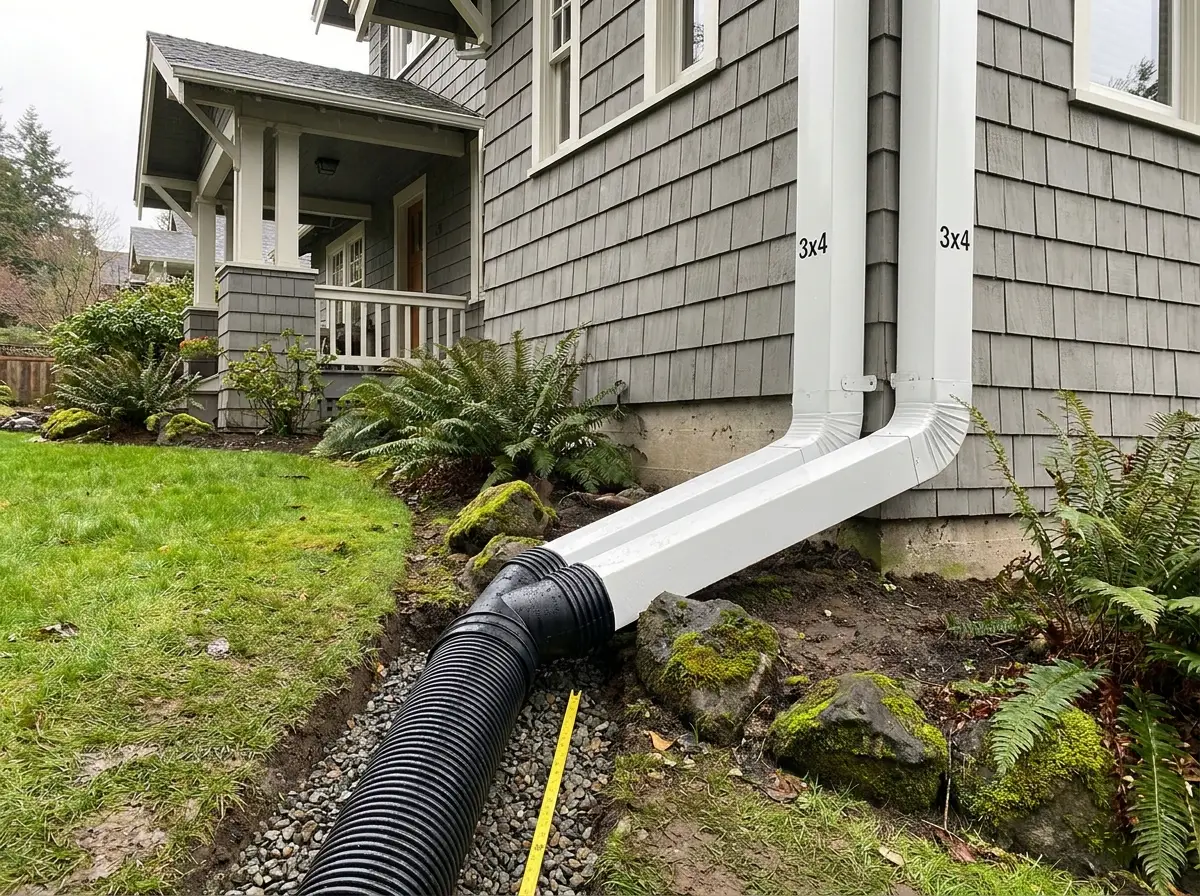
Adding downspouts is a straightforward job for a professional gutter crew. The new downspout connects to the existing gutter channel with an outlet tube, runs down the side of the house, and directs water away from the foundation through an extension or underground drain. The work typically takes a few hours and does not require replacing any of the existing gutter sections. For most homes in the Portland metro, adding one or two downspouts in key locations eliminates overflow problems completely and extends the life of the entire gutter system.