Most gutter systems do a good job of collecting water from the roof and channeling it down through vertical downspouts. But what happens after the water reaches the ground is just as important as what happens on the roof. If your downspouts dump water right next to the foundation, every rainstorm sends hundreds of gallons of water directly into the soil around your home. In Oregon, where annual rainfall totals often exceed 40 inches in the Portland metro area, this is a recipe for foundation problems, basement flooding, and landscape erosion.
Underground downspout extensions solve this problem by routing water through buried pipes that carry it well away from your foundation before releasing it at a safe distance. They are one of the most effective and least visible drainage improvements you can make to your property.
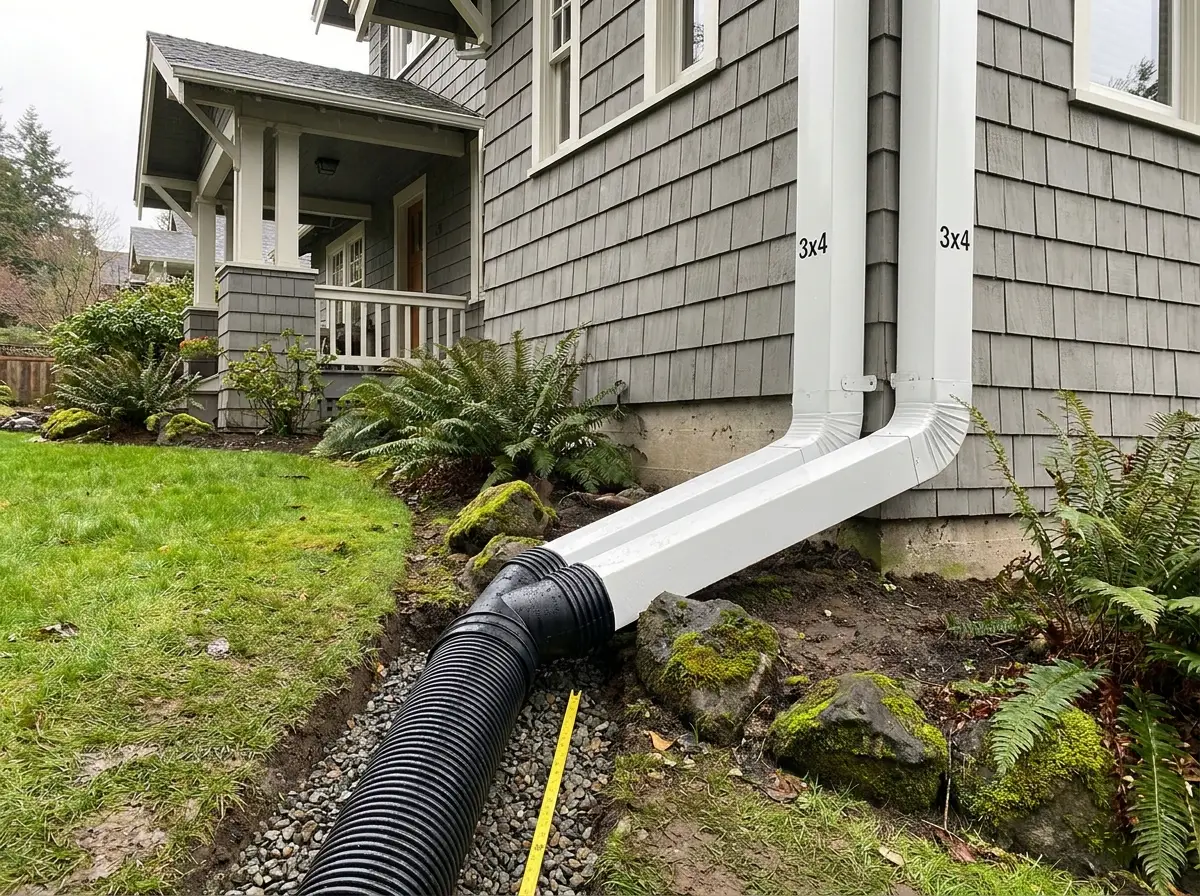
How Underground Extensions Work
An underground downspout extension connects to the bottom of your existing downspout at ground level. A transition adapter joins the rectangular downspout to a round drainage pipe buried in a shallow trench. The pipe runs underground, typically 10 to 25 feet away from the house, and terminates at a discharge point. That discharge point can be a pop up emitter, a daylight outlet at the edge of your property, or a connection to a municipal storm drain if your local code allows it.
The buried pipe is installed with a slight downward slope, usually about one inch of fall for every eight to ten feet of horizontal run. This slope allows gravity to pull water through the pipe without any pump or mechanical assistance. As long as the pipe is properly sloped and free of blockages, the system works passively every time it rains.
There are two main types of pipe used for underground extensions:
- Solid wall PVC or SDR 35 pipe: This is rigid plastic pipe that comes in 10 foot sections and is joined with glued fittings. It is the most durable option and resists root intrusion, crushing, and internal buildup. Most professional installers in the Portland area prefer solid wall pipe for long term reliability.
- Corrugated flexible drain pipe: This is the black ribbed pipe available at hardware stores. It is less expensive and easier to install because it bends around obstacles without fittings. However, the ridges inside the pipe trap sediment and debris over time, and the thinner walls are more susceptible to crushing from foot traffic or vehicle weight. It also tends to sag if the trench is not properly graded.
For most Oregon homes, 4 inch diameter pipe is standard. Homes with very large roof areas or multiple downspouts combining into a single underground run may benefit from 6 inch pipe to handle the higher volume during heavy downpours.
Pop Up Emitters and Other Discharge Options
The discharge point is where water exits the underground pipe and returns to the surface. The most common option for residential properties in Portland is a pop up emitter. This is a round lid installed flush with the ground at the end of the pipe. When water pressure builds in the pipe during a rainstorm, the lid pops open and releases water across the lawn or into a landscape bed. When the rain stops and pressure drops, the lid closes to keep out debris, dirt, and rodents.
Pop up emitters work well for most situations, but they do have limitations. They can freeze shut during the occasional Portland cold snap, and if they are installed in an area where leaves or grass clippings accumulate, the lid may not open fully. Placing the emitter in a clear area away from garden beds and mulch helps prevent these issues.
Other discharge options include:
- Daylight outlets: The pipe exits on a slope at the edge of the property and water flows out freely. This works best for properties with natural grade that slopes away from the house toward a drainage ditch, swale, or wooded area.
- Dry wells: A buried chamber filled with gravel that allows water to percolate slowly into the surrounding soil. Dry wells are useful when there is no convenient surface outlet. They work well in the sandy and loamy soils found in parts of East Portland and Gresham but are less effective in the heavy clay soils common in Beaverton and Tigard.
- Storm drain connections: Some Portland neighborhoods have storm drain inlets near the curb that accept residential downspout connections. Check with the City of Portland Bureau of Environmental Services before making this type of connection, as permits and specific installation requirements apply.
Installation Considerations for Oregon Properties
Soil type is one of the most important factors in planning an underground extension in the Portland metro area. Much of the west side of the metro area has dense clay soil that drains slowly. This means dry wells are less effective, and the trench for the pipe needs extra attention to grading because water will not naturally percolate away from the pipe. On the east side, soils tend to be sandier and more permeable, which gives you more flexibility in choosing a discharge method.
Depth is another consideration. Most residential underground extensions are buried 8 to 12 inches deep. This is deep enough to avoid damage from lawn mowers, foot traffic, and light vehicles, but shallow enough to maintain proper slope over a reasonable distance. In areas where the pipe crosses a driveway or heavy traffic path, deeper burial or the use of Schedule 40 PVC provides extra protection against crushing.
Tree roots are a real concern in Oregon, where mature Douglas fir, big leaf maple, and Western red cedar are common near homes. Roots will find and infiltrate joints in corrugated pipe. Solid wall PVC with glued joints resists root intrusion much more effectively. If the pipe route passes near large trees, a professional installer may recommend a slight detour to avoid the root zone entirely.
Winter freezing is generally not a major issue in the Portland metro area, where temperatures rarely stay below freezing for more than a day or two. However, if you live in higher elevation areas such as the West Hills, Sandy, or Estacada, burying the pipe slightly deeper provides a margin of safety against freeze and thaw cycles.
A properly installed underground downspout extension should last 30 years or more with minimal maintenance. The only routine care needed is an annual flush with a garden hose to clear any sediment that has built up in the pipe, and a visual check of the discharge point to make sure it is clear and functional.
Brothers Gutters Oregon installs underground downspout extensions throughout the Portland metro area. Whether you need a single run from one downspout or a complete underground drainage system for your entire home, we can design and install a solution that keeps water away from your foundation for decades. Call us for a free estimate.