Oregon is not typically known as a windy state the way the Great Plains or Gulf Coast are, but the Portland metro area experiences significant windstorms that can cause real damage to your home's gutter system. Fall and winter storms that roll in from the Pacific bring sustained winds of 30 to 50 miles per hour with gusts exceeding 60 or even 70 miles per hour during major events. These storms happen several times each season, and each one puts stress on your gutters in ways that may not be immediately obvious.
Wind damage to gutters is often gradual rather than catastrophic. A single storm may not rip your gutters off the house, but repeated exposure to high winds loosens fasteners, shifts alignment, and weakens connections over time. By the time you notice a problem, the damage may have been developing through multiple storm seasons. Knowing how wind affects your gutters helps you catch problems early and prepare your system before the next major storm.
How Wind Attacks Your Gutters
The most direct form of wind damage is lifting. When strong wind flows across your roof, it creates an area of low pressure along the roof edge. This low pressure zone pulls upward on anything attached to the eave, including your gutters. During sustained high winds, this upward force repeatedly lifts and releases the gutter, working the hangers loose from the fascia with each cycle. Over multiple storms, hangers that were originally seated firmly in solid wood can become loose enough that the gutter begins to pull away from the house.
The effect is worse on homes with wide open exposure to prevailing winds. Properties along the Columbia River Gorge corridor, homes on hilltops in the west hills, and houses at the edges of subdivisions where there are no neighboring structures to break the wind all experience more lifting force than homes sheltered by surrounding buildings and trees.
Debris impact is the second major way wind damages gutters. Falling branches are the most obvious culprit. A large branch landing on a gutter can dent, crack, or completely crush a section of the channel. But smaller debris causes damage too. Pinecones, broken limbs, and even loose shingles blown from nearby roofs can strike your gutters with enough force to dent aluminum or crack vinyl. During major windstorms, airborne debris can also knock downspouts off their brackets or bend downspout elbows out of alignment.
Trees that overhang your roofline present a particular risk during windstorms. Even healthy branches can break in high winds, and dead branches that have been hanging in the canopy for months often come down during the first strong fall storm. Douglas fir, which is abundant throughout the Portland metro area, is especially prone to dropping large limbs during wind events. A single fir branch can weigh enough to tear a gutter completely off the fascia and damage the fascia board in the process.
Loosened Hangers and Hidden Damage
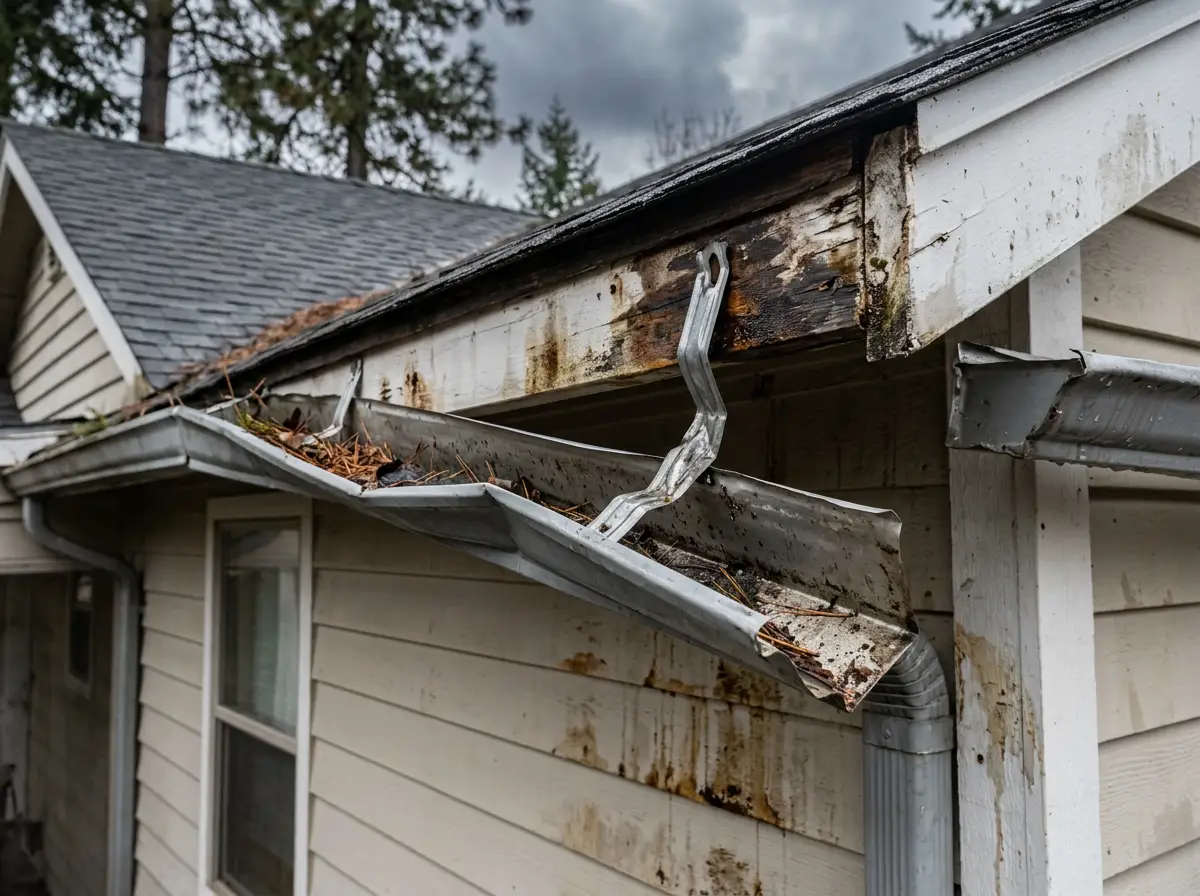
The most common wind related gutter problem is loosened hangers, and it is also the hardest to spot from the ground. Gutter hangers are typically screwed or nailed into the fascia board and the rafter tails behind it. When wind repeatedly lifts the gutter, these fasteners work back and forth in the wood, enlarging the holes and reducing their holding power. The gutter may still look fine from a distance, but a close inspection reveals that it wobbles when touched or has pulled slightly away from the fascia at certain points.
Loosened hangers compromise the entire gutter system in multiple ways. A gutter that is no longer held firmly against the fascia allows water to flow behind it, wetting the fascia board and potentially the soffit and wall sheathing behind it. This water intrusion causes wood rot that further weakens the hanger attachment, creating a cycle of progressive failure.
A gutter with loose hangers also loses its proper slope. As hangers shift, the gutter develops low spots where water pools instead of flowing toward the downspout. Standing water adds weight, which pulls the gutter down further at the weak points. If left unaddressed, a gutter with multiple loose hangers will eventually sag visibly and may detach from the house entirely during the next storm.
Seam separation is another form of hidden wind damage. On sectional gutters, the joints between sections are sealed with caulk or gaskets. Wind induced movement can break these seals and allow the sections to shift slightly relative to each other. The result is a slow leak at the seam that drips onto the fascia and siding below. These leaks are easy to miss because they only occur during rain, and most homeowners are not outside examining their gutters during a storm.
Storm Preparation and Post Storm Inspection
Preparing your gutter system before storm season reduces the risk of wind damage and makes post storm repairs simpler. Start by cleaning your gutters thoroughly in early fall. Gutters full of wet debris are heavier, which means the lifting force of wind puts more strain on the hangers. Empty gutters are lighter and more resilient in high winds.
Trim any branches that overhang your roofline or hang within striking distance of your gutters. The goal is not to remove every tree near your house but to eliminate the obvious hazards, particularly dead branches and limbs that are already cracked or partially broken. Many Portland area tree services are busiest right after a storm, so scheduling trimming before storm season means shorter wait times and lower prices.
Check every hanger by hand before the first major storm. Walk the perimeter of your house with a ladder and push gently on the gutter every few feet. If it moves away from the fascia at any point, that hanger needs to be tightened or replaced. This is a quick inspection that takes less than an hour on most homes and can prevent a minor issue from becoming a major repair during a storm.
After any significant windstorm, walk the outside of your home and look for the following signs of damage.
- Gutters that have pulled away from the fascia or are hanging at an angle
- Visible dents or crushed sections from branch impacts
- Downspouts that have been knocked loose from their brackets
- Debris piled inside the gutters that could cause clogs during the next rain
- Pieces of gutter or downspout on the ground
If you find damage after a storm, it is best to address it before the next rain event. In Oregon, storms often come in clusters during fall and winter, and a damaged gutter system that goes unrepaired will suffer more damage with each subsequent storm. If you need a post storm gutter inspection or repair, call us and we will get to you as quickly as possible. We prioritize storm damage calls because we know the next storm is never far behind.