If you have noticed a gap forming between your gutters and the roofline, you are dealing with one of the most common gutter problems in the Pacific Northwest. Gutters that pull away from the house cannot direct water properly, and the resulting overflow can damage your siding, foundation, and landscaping. Understanding why this happens is the first step toward a lasting repair.
Portland and the surrounding Oregon communities receive roughly 43 inches of rain each year, with most of it falling between October and May. That sustained moisture puts constant stress on every component of your gutter system. When one part fails, the entire run can begin separating from the fascia board, and the problem only gets worse with each passing storm.
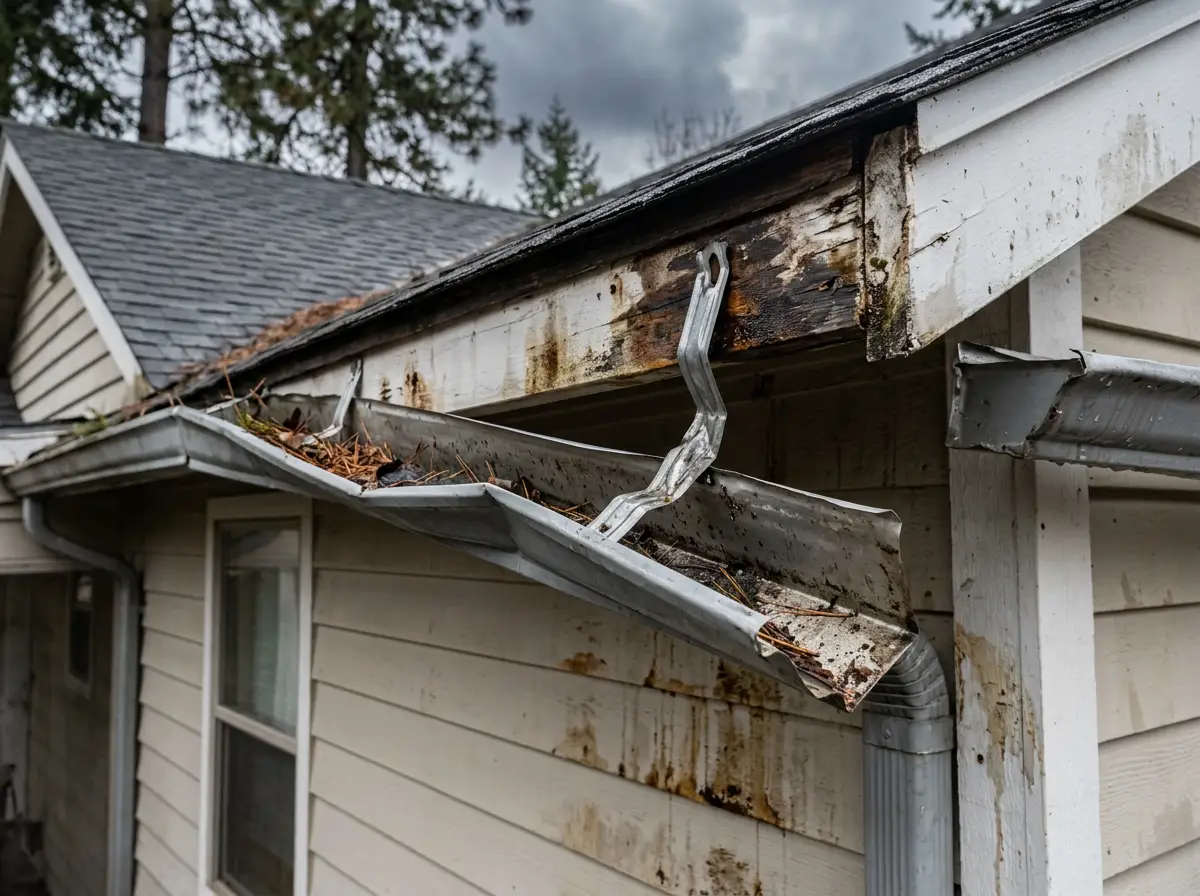
Common Causes of Gutters Pulling Away
Rotted fascia board is the number one reason gutters separate from a house in western Oregon. The fascia is the wooden board that runs along the edge of your roofline, and it serves as the mounting surface for your gutter hangers and spikes. When water repeatedly gets behind the gutter or seeps through aging paint, the wood begins to soften and decay. Once the fascia loses its structural integrity, the screws and nails that hold your gutters in place have nothing solid to grip, and gravity pulls the gutter away from the house.
Inadequate or worn out hangers are another frequent culprit. Older gutter systems often use spike and ferrule fasteners spaced 32 inches apart or more. Over time, these spikes loosen as the wood expands and contracts through seasonal temperature changes. When hangers are spaced too far apart, the gutter sags under the weight of water and debris, creating a snowball effect where each heavy rain stretches the system a little further from the house.
Ice and snow weight can also force gutters away from the fascia. While Portland does not experience heavy snowfall every year, occasional winter storms can deposit enough frozen weight in the gutter channel to overwhelm standard fasteners. Ice dams that form along the roof edge add even more downward force and can bend or break hangers that were already under stress.
Age is a factor that affects every gutter system eventually. Aluminum expands and contracts with temperature swings, and after 15 to 20 years of this cycle the fastener holes widen. The combination of metal fatigue, loosened hardware, and cumulative wear makes older gutters far more likely to separate from the house during a heavy Oregon rainstorm.
How to Fix Gutters That Have Pulled Away
The right repair depends on the root cause. Here are the most effective solutions that our crews use across Oregon's coast.
- Replace damaged fascia board. If the wood is soft, spongy, or visibly decayed, no amount of new hardware will hold the gutter securely. Remove the gutter run, cut out the rotted fascia, and install new treated lumber or a composite material that resists moisture. Once the new fascia is in place, the gutter can be remounted with confidence.
- Add more hangers. If the existing hangers are spaced more than 24 inches apart, adding hangers between them distributes the load more evenly. For areas that collect heavy debris or see significant rainfall, spacing hangers every 18 inches provides the strongest support.
- Upgrade to hidden hangers. Modern hidden hanger systems use a clip that locks inside the gutter channel and screws directly through the fascia into the rafter tail behind it. This creates a stronger connection than traditional spikes and also gives the gutter a cleaner appearance with no visible hardware on the front face.
- Install longer screws into rafter tails. Sometimes the fascia board is still sound, but the original fasteners were too short to reach the structural framing behind it. Driving longer screws through the fascia and into the rafter tails anchors the gutter to the strongest part of the roof structure.
In many cases, a combination of these solutions produces the best result. For example, a home in Beaverton might need new fascia on the north facing side where shade keeps the wood damp, plus additional hidden hangers along the entire run to prevent future sagging.
Why Portland Homeowners Should Act Quickly
Oregon's wet climate means that a gutter pulling away from the house is never just a cosmetic issue. Even a small gap allows water to run down the back side of the gutter and soak into the fascia, soffit, and wall sheathing behind it. Over a single rainy season, that moisture can cause mold growth in the attic, staining on interior ceilings, and erosion around your foundation.
The longer you wait, the more expensive the repair becomes. What starts as a simple hanger replacement can turn into a full fascia rebuild if water damage is allowed to spread. Homes in areas like Lake Oswego, Tigard, and Hillsboro that sit under mature tree canopies face an even higher risk because leaf debris adds weight and traps moisture against the fascia.
If your gutters are visibly separating from the roofline, sagging in certain sections, or overflowing during moderate rain, a professional inspection can identify the exact cause and recommend the most cost effective fix. Brothers Gutters Oregon provides free estimates throughout the Portland metro area and can typically complete repairs the same week.