A leaking gutter might seem like a minor annoyance, but left unaddressed it can cause serious damage to your home. In Portland and throughout western Oregon, where rain falls steadily for months at a time, even a small leak can channel hundreds of gallons of water into places it was never meant to go. Water staining on fascia boards, eroded landscaping, and damp basement walls are all signs that a gutter leak has been doing damage quietly. Understanding what causes these leaks is the first step toward fixing them.
Common Causes of Gutter Leaks
The most frequent cause of gutter leaks in the Portland area is seam failure. Traditional sectional gutters are assembled from individual pieces joined together at seams. These seams are sealed with caulk or gutter sealant during installation, but that sealant does not last forever. Oregon's constant moisture, combined with the expansion and contraction that comes with temperature swings between summer and winter, causes sealant to crack and separate over time. Once a seam opens up, water drips through at every rainfall.
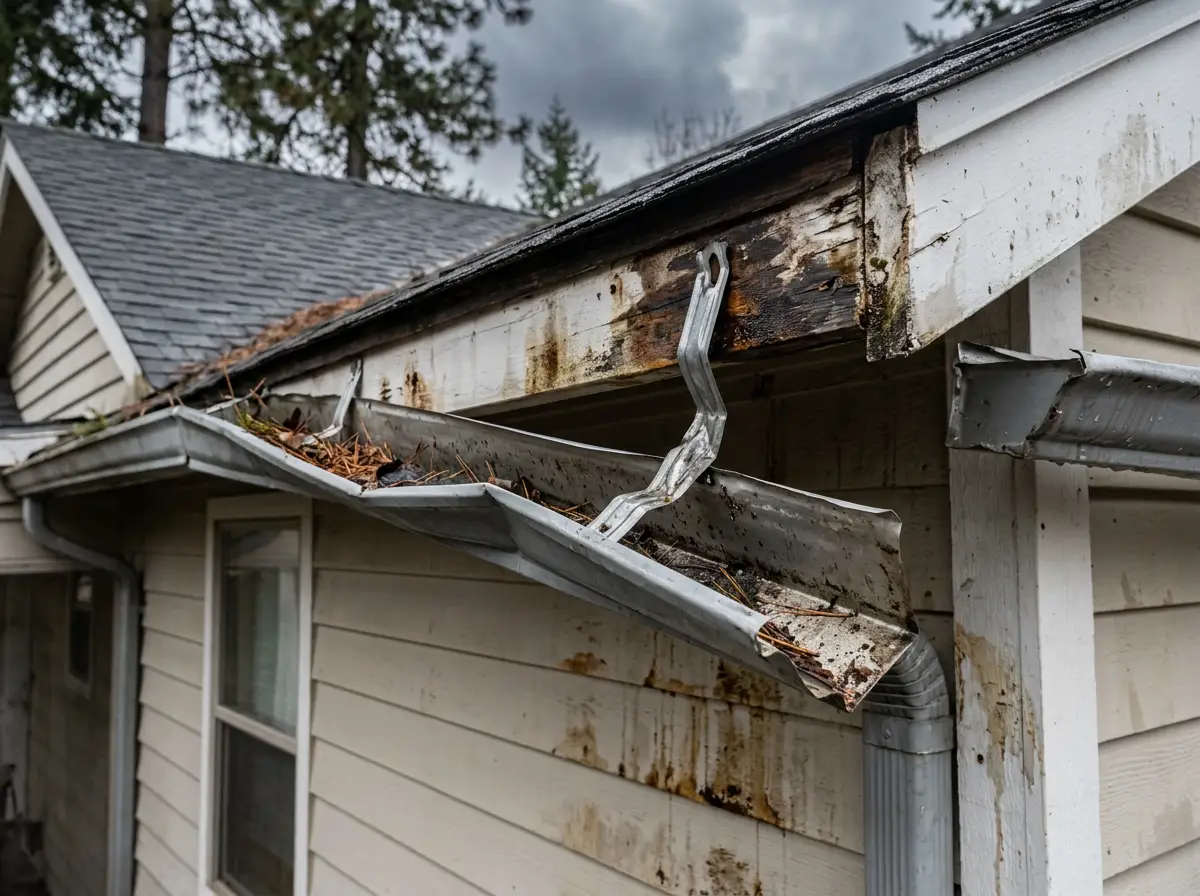
Seam leaks are especially common at corners and at the joints where a gutter run connects to a downspout outlet. These are high stress points where water pressure is concentrated, and the sealant wears out faster than it does along straight runs. If your gutters are more than 10 to 15 years old and you notice dripping at joints during rain, seam failure is the most likely explanation.
Corrosion is another significant cause of gutter leaks, though it manifests differently depending on the gutter material. Galvanized steel gutters, which were common on older Portland homes, are particularly vulnerable. Once the zinc coating wears through, the underlying steel rusts quickly in Oregon's wet climate. Rust holes can appear along the bottom of the gutter channel, at screw holes, and around areas where standing water sits regularly. Aluminum gutters resist rust but can develop pinhole leaks from galvanic corrosion if they come in contact with incompatible metals, such as copper flashing or steel fasteners.
Improper slope is a less obvious but equally damaging cause of gutter problems. Gutters need a slight downward pitch toward the nearest downspout so that water moves through the system rather than sitting in the channel. If a gutter section is level or slopes away from the downspout, water pools in place. That standing water accelerates corrosion, adds weight that can pull the gutter away from the fascia, and eventually finds its way through any weak point in the system. Slope problems sometimes develop gradually as hangers loosen or fascia boards soften from moisture exposure.
Physical damage is also a common culprit. Fallen branches during Oregon's wind storms can dent or crack gutters. Ladders leaned carelessly against the gutter edge can bend the lip and create low spots where water collects. Even heavy ice during the occasional Portland freeze can distort gutter profiles enough to create new leak points.
When to Repair and When to Replace
Not every gutter leak requires a full system replacement. Many leaks can be fixed with targeted repairs that extend the life of your existing gutters by several years. Here are some guidelines for deciding between repair and replacement:
Repair makes sense when the problem is localized. A single failed seam can be cleaned, dried, and resealed with a quality gutter sealant. Small rust holes or pinhole leaks can be patched with a gutter repair kit or a piece of flashing set in sealant. If the gutter system is otherwise in good condition and only one or two spots are leaking, repairs are the practical and cost effective choice.
Replacement becomes the better option when problems are widespread. If seams are failing in multiple locations, if rust is visible across long sections of the gutter, or if the fascia board behind the gutter has started to rot, patching individual leaks will not solve the underlying issue. You will end up spending money on repairs that only buy a few more months before the next leak appears.
Age is another factor to weigh. Aluminum gutters typically last 20 to 30 years. Galvanized steel may last 15 to 20 years before corrosion becomes a serious problem. If your gutters are approaching the end of their expected lifespan and repairs are becoming more frequent, replacement with a modern seamless system is usually the smarter long term investment.
Seamless gutters, which are formed on site from a single continuous piece of metal, eliminate most seam related leaks entirely. The only joints in a seamless system are at corners and downspout connections, which dramatically reduces the number of potential leak points. For homes in the Portland metro area that deal with nine months of rainfall each year, the reduction in maintenance alone makes seamless gutters worth considering.
If you are unsure whether your leaking gutters need a simple repair or a full replacement, having a local gutter professional inspect the system is the best way to get a clear answer. A thorough inspection covers not just the gutters themselves but also the fascia, the roof edge, and the downspout drainage, all of which affect how well the system performs. Catching and fixing gutter leaks early saves money, prevents water damage, and keeps your home protected through every Oregon rain season.