Building a new home in Oregon is an exciting process, but one detail that often gets overlooked until late in the project is the gutter system. Gutters may not be the most glamorous part of your new home, but in a state that receives as much rain as Oregon does, they are one of the most important. Getting your gutter installation right during new construction is far easier and more cost effective than trying to fix problems after you have already moved in.
Whether you are building in a new subdivision in Beaverton, on acreage near Oregon City, or in one of the many infill lots across inner Portland, here is what you need to know about planning gutter installation for your new build.
Timing and Coordinating with Your Builder
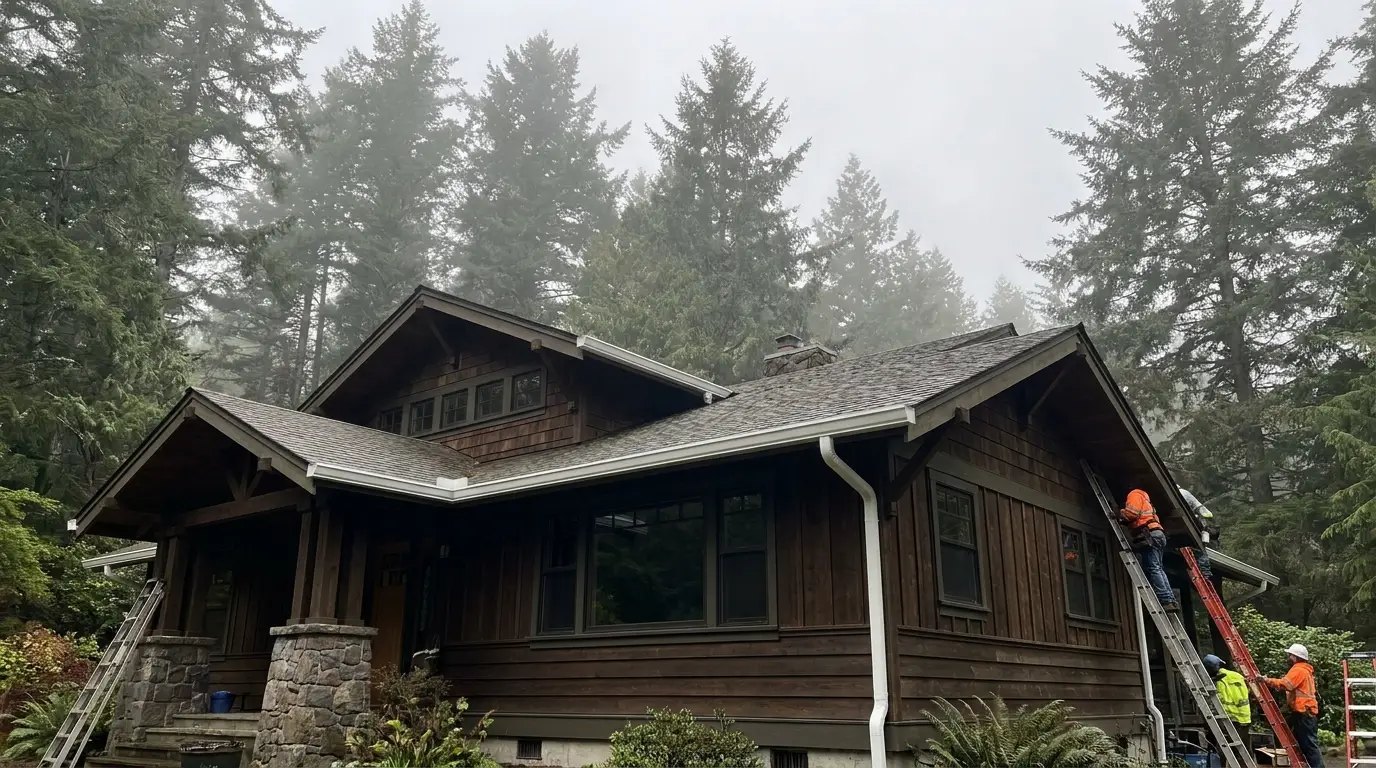
The best time to install gutters on a new construction home is after the roofing, siding, and exterior trim are complete but before the final landscaping goes in. This is typically one of the last exterior trades to come through, and for good reason. The roof needs to be finished so we can measure exact fascia lengths and roofline geometry. The siding and trim need to be in place so the gutters can be properly attached and sealed against the exterior.
Installing before landscaping is important because gutter installation requires ladder placement around the entire perimeter of the house, and we need clear access to set up downspout routing. Once landscaping, walkways, and patios are in place, it becomes more difficult to position equipment and can increase the risk of damaging new plantings or hardscape.
Communication with your general contractor or builder is key. Let them know early in the project that you want to bring in your own gutter installer rather than using whatever subcontractor they have on their standard list. Many builders include basic gutters in the contract, but these are often the cheapest option available. Standard builder grade gutters frequently use sectional pieces with visible seams every 10 feet, lighter gauge aluminum, and fewer downspouts than ideal for Oregon rainfall.
By specifying your own gutter contractor, you can ensure seamless gutters, heavier gauge material, proper downspout placement, and the right sizing for your roof. Most builders are willing to accommodate this request, and some will even provide a credit if gutters were included in the original contract.
Plan to have your gutter installer visit the site at least once during construction, ideally when the roof is framed but before fascia is installed. This early visit allows us to verify fascia dimensions, identify any unusual roofline features that need special attention, and coordinate with the builder on items like drip edge installation and fascia material selection.
Choosing the Right Materials for Oregon Weather
For new construction in Oregon, the material choices you make for your gutter system will affect performance, appearance, and maintenance for decades to come. Here are the most common options and how they hold up in our climate.
Aluminum is by far the most popular choice for residential gutters in the Pacific Northwest, and for good reason. It does not rust, it is lightweight, it holds paint well, and it comes in a wide range of colors that can be matched to your home's trim. For new construction, we recommend 0.032 inch gauge aluminum at minimum. This is thicker than the 0.027 inch gauge that many budget installers use, and it resists denting from branches, ladders, and the occasional hailstorm that rolls through the Portland area.
Copper is the premium option. Copper gutters will outlast the home itself, often lasting 50 years or more with minimal maintenance. They develop a green patina over time that many homeowners find attractive, especially on Craftsman, Tudor, and other traditional home styles. The downside is cost. Copper gutters typically run three to four times the price of aluminum. For a custom home where aesthetics and longevity are the top priorities, copper is worth considering.
Steel gutters, specifically galvanized steel, offer excellent strength and durability but can rust over time, especially in Oregon's wet climate. Galvalume coated steel resists corrosion better than standard galvanized and is worth considering if you prefer the rigidity that steel provides. Steel is a particularly good choice for commercial construction or for homes in areas with heavy snow loads, like the foothills near Mount Hood.
Vinyl gutters are the least expensive option, but we generally do not recommend them for new construction in Oregon. Vinyl becomes brittle in cold weather, fades in sunlight, and has a shorter lifespan than aluminum. For a new home that you plan to live in for years, investing in aluminum or better will pay for itself many times over.
Sizing, Downspouts, and Drainage Planning
New construction gives you the advantage of designing the entire drainage system from scratch rather than working around existing conditions. This is the time to get sizing right. For most Oregon homes, 5 inch K style gutters paired with 2 by 3 inch downspouts provide adequate capacity. Homes with large roof areas, steep pitches, or complex rooflines that concentrate water into specific sections should consider 6 inch gutters with 3 by 4 inch downspouts.
Downspout placement is another area where new construction has an advantage. On existing homes, downspouts are often limited to locations where they can be attached without interfering with windows, doors, or other features. On a new build, you can plan downspout locations in advance and even have the builder frame out areas where downspouts will run, ensuring clean installation with no awkward routing.
Think about where the water goes after it leaves the downspouts. Oregon building codes require that roof drainage be directed away from the foundation. Options include underground drain lines connected to the storm sewer, French drain systems that disperse water into the soil away from the home, or above ground extensions that carry water at least four to six feet from the foundation.
For new construction, underground drain lines are the cleanest option and should be installed while the site is still being graded. Connecting your downspouts to underground pipes during grading costs far less than trenching through finished landscaping later. Coordinate with your builder and your gutter installer to ensure the underground lines are positioned correctly for the planned downspout locations.
If you are building a new home in the Portland metro area and want to make sure your gutter system is designed and installed correctly from the start, we would be happy to consult with you and your builder. Give us a call to schedule a site visit during your construction process.