When your downspouts discharge water right next to the foundation, it has to go somewhere. In Portland and across the Willamette Valley, that water often pools against the house, saturates the soil, and eventually finds its way into basements, crawl spaces, and foundation walls. A dry well gives that water a better destination by collecting it underground and allowing it to percolate slowly into the surrounding soil.
Dry wells are one of the most effective ways to manage roof runoff on Oregon properties where surface drainage is limited. If your lot slopes toward the house, your neighbors are close on both sides, or your city has restrictions on stormwater discharge to the street, a dry well may be the best solution available.
How a Dry Well Works and When You Need One
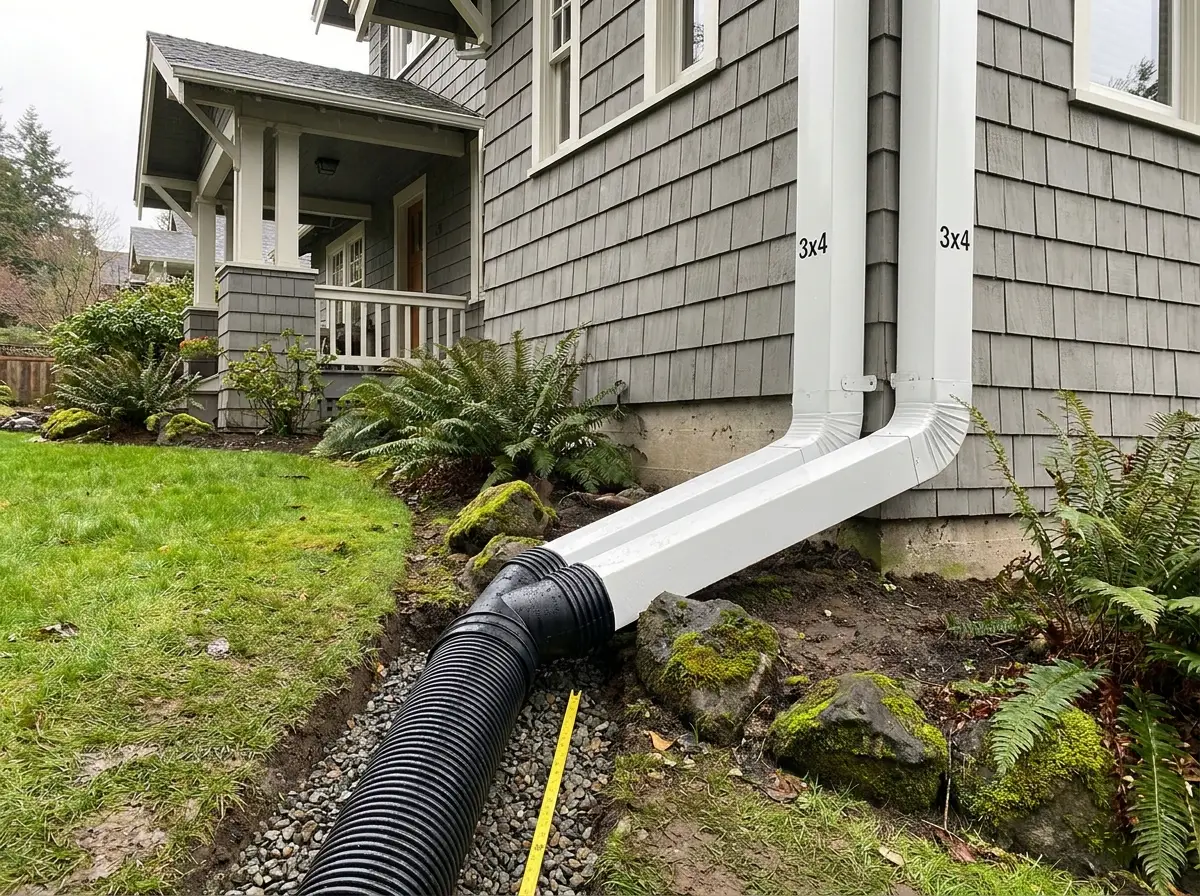
A dry well is an underground chamber, usually made from a perforated plastic barrel or a concrete vault, buried several feet below grade. Underground piping connects it to one or more downspouts. When it rains, water flows from the gutters through the downspouts, into the buried pipe, and down into the dry well. From there, it slowly seeps out through the perforated walls and into the surrounding soil.
The concept is simple, but the execution depends on several factors specific to your property. You need enough yard space to place the well at least ten feet from the foundation. The soil needs to drain well enough to absorb the volume of water your roof produces. And the well needs to be sized correctly so it does not overflow during the heavy sustained rains that Oregon is known for.
Dry wells are especially useful in the following situations.
- Properties where extending downspouts across the surface is not practical due to walkways, driveways, or landscaping
- Homes on flat lots where water does not naturally drain away from the foundation
- Neighborhoods in Portland, Beaverton, and Tigard where city stormwater codes restrict surface discharge
- Yards where surface runoff from downspouts creates erosion or standing water
- Properties with finished basements or moisture sensitive crawl spaces that need extra protection
Soil Conditions and Sizing in the Willamette Valley
The biggest variable in dry well performance is soil type. Much of the Portland metro area sits on clay heavy soil, particularly in neighborhoods west of the Willamette River. Clay soil drains slowly, which means the dry well fills up faster than the water can percolate out. If your soil is mostly clay, the dry well needs to be significantly larger or you may need multiple wells to handle the volume.
A simple percolation test can tell you how fast your soil drains. This involves digging a hole, filling it with water, and measuring how quickly the level drops. In sandy or loamy soil, which is more common in east Portland and parts of Clackamas County, the water may drop several inches per hour. In heavy clay, it might drop less than half an inch. That difference directly affects how large the dry well needs to be.
For a typical Portland home with about 1,500 square feet of roof area, a single dry well in well draining soil might need a capacity of 50 to 70 gallons. In clay soil, that same home might need 150 gallons or more of capacity, potentially split across two wells. Your gutter installer can help you calculate the right size based on your roof area, local rainfall data, and a soil assessment.
Portland receives an average of about 43 inches of rain per year, with the heaviest months running from November through March. The system needs to handle not just the total volume but the peak flow during sustained downpours. Oregon storms can drop an inch or more in a single day, and the dry well needs to absorb that without backing up into the downspout lines.
Permits, Installation, and Maintenance
Permit requirements for dry wells vary by jurisdiction across Oregon's coast. In the City of Portland, underground injection controls may apply because dry wells are classified as underground injection devices by the Oregon Department of Environmental Quality. Depending on the size and location, you may need to register the system. Other cities in the metro area, including Beaverton, Hillsboro, and Lake Oswego, have their own stormwater management rules. A qualified installer will know what is required in your specific area.
Installation typically involves excavating a hole large enough for the well chamber, running solid pipe from the downspout to the well with a consistent downward slope, surrounding the well with drainage rock, and backfilling the area. The pipe should have a minimum slope of one quarter inch per foot to keep water flowing without settling. A filter fabric wrapping around the rock bed prevents soil from migrating into the drainage rock and clogging the system over time.
Maintenance is straightforward but important. The system should be inspected once a year, ideally in early fall before the rainy season begins. Check the downspout connection points for debris, flush the underground pipe with a garden hose to clear any sediment, and verify that the dry well is draining properly by running water into it and observing how quickly it absorbs. If the well drains noticeably slower than it did in previous years, the surrounding soil or drainage rock may need attention.
Many homeowners in the Portland area combine dry well installation with a full gutter replacement or upgrade. Running the underground piping at the same time as installing new gutters and downspouts saves labor and ensures that every connection is properly sealed and sloped. If you are already planning gutter work, it is worth considering whether a dry well should be part of the project.
The investment in a properly installed dry well protects your foundation, keeps your yard dry, and eliminates the puddles and erosion that surface discharge creates. For Oregon homeowners dealing with nine months of rain each year, it is one of the smartest upgrades you can make to your drainage system.