Most homes in the Portland metro area come with standard 2x3 inch downspouts. These work fine for light rain and small roof areas, but Oregon does not have light rain for most of the year. From October through March, Portland averages over 36 inches of rainfall, and that water has to go somewhere. When downspouts cannot keep up with the volume, gutters overflow, fascia boards rot, and water pools around your foundation.
Upgrading to oversized 3x4 inch downspouts is one of the simplest improvements you can make to your gutter system. The difference in capacity is not minor. A 3x4 downspout moves roughly twice the volume of water compared to a standard 2x3. That extra capacity means your gutters drain faster, stay cleaner, and handle peak storms without overflowing.
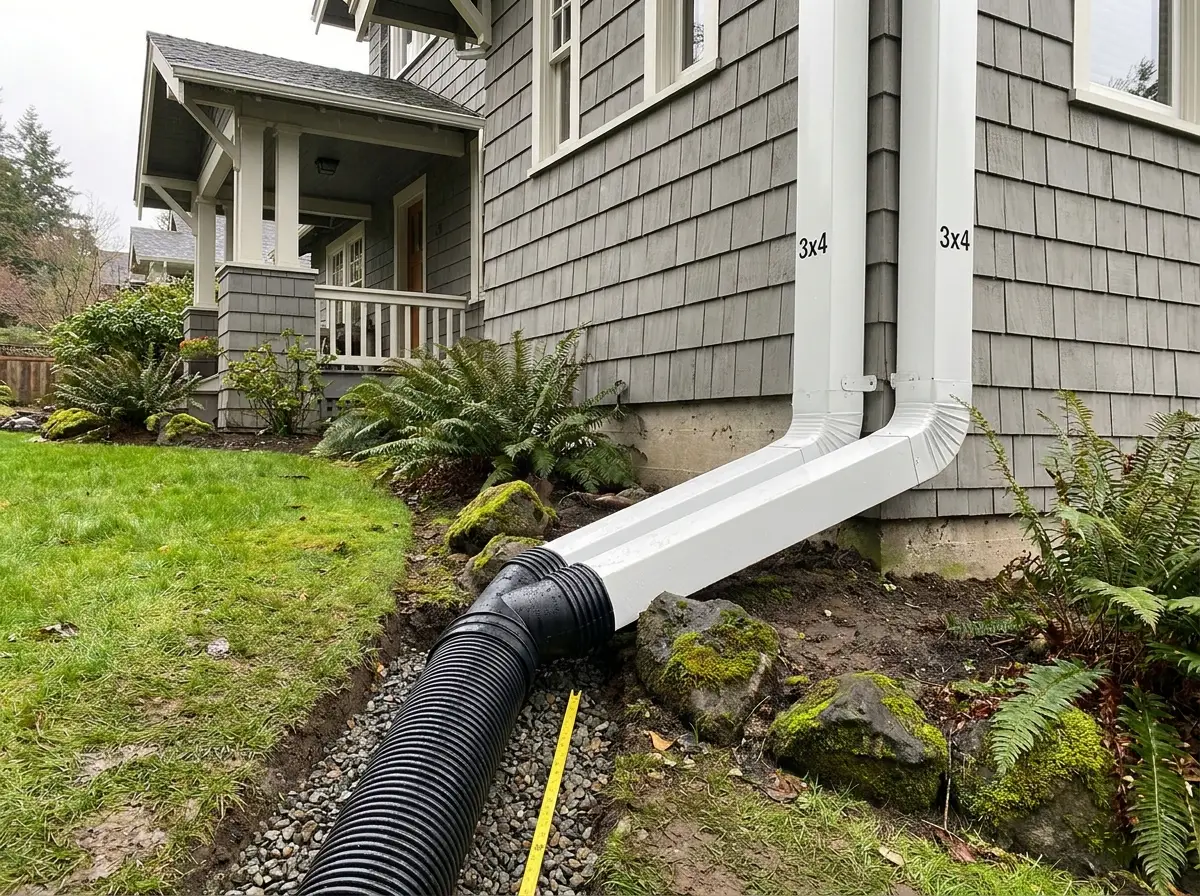
Why Bigger Downspouts Handle Oregon Weather Better
Portland receives about 43 inches of rain in a typical year, but the rain does not fall evenly. Atmospheric river events can dump two or three inches in a single day, and those peak intensity hours are when undersized downspouts fail. A standard 2x3 downspout can handle roughly 600 square feet of roof area in moderate rain. During a heavy downpour, that number drops significantly. A 3x4 downspout handles over 1,200 square feet of roof area under the same conditions, giving you a comfortable margin even during the worst storms.
Oregon homes also deal with debris that other regions do not see in the same volume. Douglas fir needles, moss fragments, maple seeds, and leaf litter all wash into gutters and funnel toward the downspout opening. A 2x3 opening is small enough that a single clump of wet leaves can block it entirely. The larger 3x4 opening is far more resistant to clogging because debris that would plug a small downspout passes through the larger one without getting stuck.
This matters especially during fall and winter when debris loads are heaviest and rain is most intense. The combination of heavy debris and heavy rain is exactly when you need your downspouts working at full capacity, and that is exactly when undersized ones fail.
Pairing Oversized Downspouts with 6 Inch Gutters
Oversized downspouts work best when paired with 6 inch gutters instead of the standard 5 inch size. A 6 inch gutter holds about 40 percent more water than a 5 inch gutter, and the wider trough gives water more room to flow toward the downspout outlets. When you pair a high capacity gutter with a high capacity downspout, the entire system works together to move water off your roof and away from your foundation as quickly as possible.
If you install 3x4 downspouts on a 5 inch gutter system, you still get improved drainage, but the gutter itself becomes the bottleneck during heavy rain. The downspouts can handle the flow, but the gutter trough fills up before the water reaches the outlets. For the best performance in Oregon conditions, the 6 inch gutter and 3x4 downspout combination is the standard we recommend for most homes.
The cost difference between standard and oversized downspouts is small relative to the total cost of a gutter installation. The downspout material itself costs slightly more per foot, and the outlet holes cut into the gutter are larger, but the labor is essentially the same. For a typical Portland home with four to six downspout runs, the upgrade adds a modest amount to the total project cost while significantly improving system performance.
Appearance and Color Matching
Some homeowners hesitate to install oversized downspouts because they worry about the visual impact. A 3x4 downspout is noticeably wider than a 2x3, and on a small home it can look out of proportion if placed poorly. The key is thoughtful placement and color matching. When the downspout color matches your trim or siding, the larger size blends in far better than a mismatched smaller downspout.
Aluminum downspouts are available in over 20 factory finished colors, so matching your home is rarely a problem. White, almond, musket brown, dark bronze, and black cover most Portland area homes, but specialty colors are available for craftsman and mid century styles that call for something specific. The factory baked enamel finish holds up for decades without peeling or fading, so the color match stays consistent over time.
Downspout placement also matters for appearance. Running downspouts along inside corners of the house, behind columns, or along less visible elevations keeps them discreet while still providing full drainage. A good installer plans downspout locations during the estimate, balancing drainage needs with visual impact so the final result looks intentional rather than awkward.
If your current gutters overflow during heavy rain or your downspouts clog every fall, oversized downspouts may be the solution. The upgrade is straightforward, the cost difference is manageable, and the performance improvement is significant for any home in the Portland metro area.