Gutter guards are one of the best investments a homeowner can make to reduce maintenance, but they are not a set it and forget it product. Even the highest quality guards need occasional attention to keep performing at their best. In Oregon, where the combination of heavy rainfall, abundant tree cover, and mossy conditions creates unique challenges, a simple seasonal maintenance routine keeps your gutter guards doing their job year after year.
The good news is that maintaining gutter guards takes a fraction of the time and effort that cleaning unprotected gutters requires. Instead of scooping out handfuls of decomposed leaves twice a year, you are doing a quick visual inspection and occasionally brushing debris off the surface. It is the difference between a major chore and a minor checkup.
What to Check Each Season
Oregon's climate creates distinct seasonal challenges for gutter guards. Each season brings different debris types and weather conditions that affect how the guards perform.
In fall, deciduous leaves are the primary concern. Maple, oak, and alder leaves are common across Oregon's coast, and while gutter guards prevent these leaves from entering the gutter trough, the leaves can accumulate on the guard surface. A thick layer of wet leaves sitting on top of the guards can prevent water from flowing through, essentially creating a dam on the surface. Most of the time, wind and rain wash these leaves off naturally. But in sheltered areas, particularly on the north side of the house or under overhanging branches, leaves can pile up and stay put.
A quick walk around the house in late November or early December after the major leaf drop gives you a chance to spot any sections where leaves have accumulated. A soft broom, a leaf blower on a low setting, or even a garden hose can clear the surface in minutes. You do not need to remove the guards or get on the roof to do this. Work from a ladder positioned safely against the gutter, or use an extension tool from the ground if the guards are on a single story section.
In winter, the main concern is moss and algae growth. Oregon's damp, overcast winters create ideal conditions for moss to establish on almost any outdoor surface, including gutter guards. A thin layer of moss on micro mesh or screen style guards can reduce water flow significantly because the moss fills the tiny openings that water needs to pass through. If you notice green growth forming on the guard surface during winter months, a gentle scrub with a soft brush and a rinse with the hose will clear it. Avoid using a pressure washer, which can damage the guard material or push debris into the mesh openings.
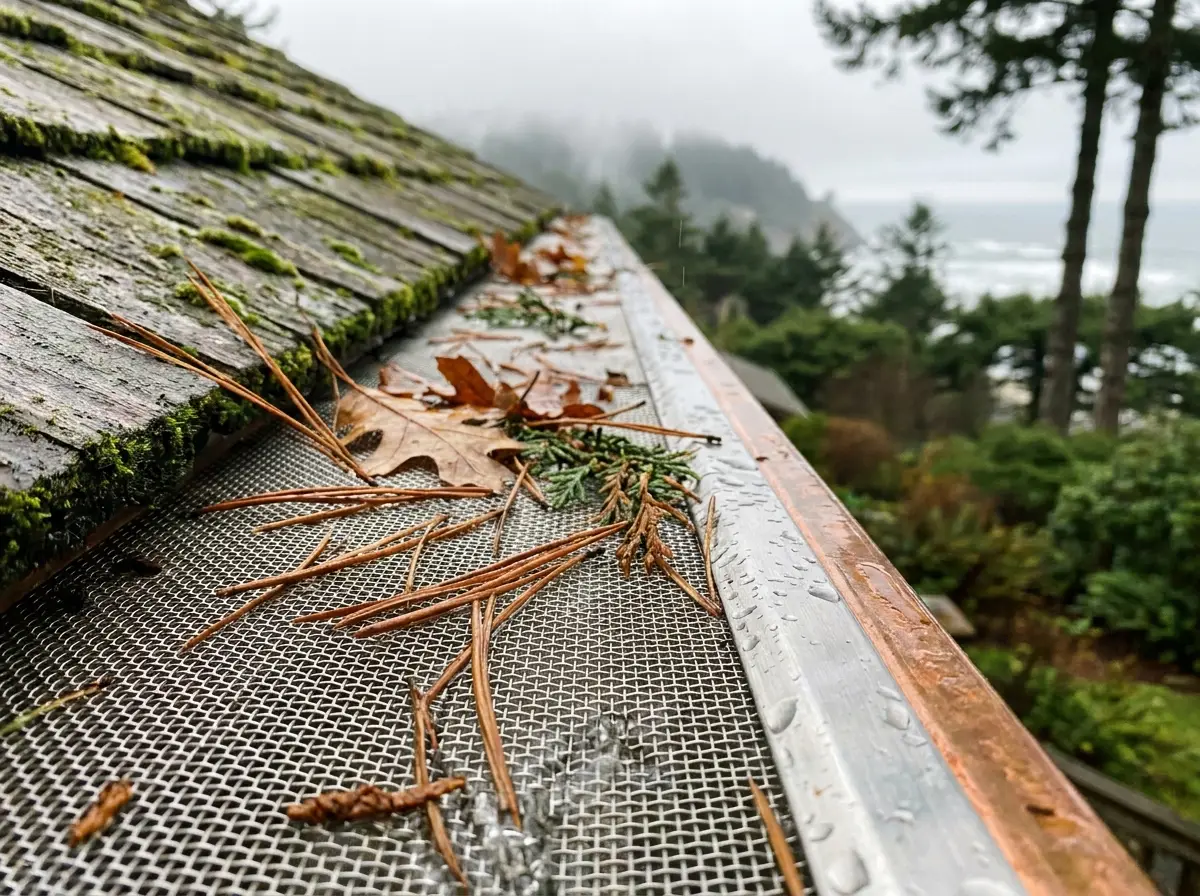
Spring brings pollen, seed pods, and the small debris that conifers shed throughout the year. Douglas fir and western red cedar, both common across the Portland area, drop needles, small cones, and pollen catkins that can accumulate in the channels and edges of gutter guards. This fine debris is more likely to work its way into mesh openings than large leaves, so spring is a good time to inspect the guard surface closely and brush away anything that has settled into the texture of the material.
When Guards Need Professional Attention
Most seasonal maintenance can be handled by the homeowner with basic tools and a stable ladder. But there are situations where calling a professional makes sense.
If your gutter guards have been in place for several years without any maintenance, there may be a buildup of fine sediment and organic material on the surface or underneath the guards that requires more thorough cleaning. A professional gutter service can remove the guards section by section, clean the gutter trough underneath, clean the guard surface, and reinstall everything properly. This type of deep cleaning is typically needed every three to five years in Oregon, depending on how much tree cover surrounds your home.
Physical damage to the guards also warrants professional attention. Heavy branches falling during winter storms can dent or bend guard panels. Ice formation along the roofline, while uncommon in Portland, can distort guards that are mounted with clips rather than screws. If a section of guard has shifted out of position, water may be flowing behind it rather than through it, which defeats the purpose entirely. A professional can assess whether the damaged section needs repair or replacement and ensure the rest of the system is properly seated.
You should also call a professional if you notice water overshooting the gutters during heavy rain even though the guards appear clean. This can indicate that the guards have reduced the effective intake area too much for your roof size, or that debris has accumulated underneath the guards where you cannot see it from the surface. An experienced installer can diagnose the issue and recommend adjustments.
Matching Maintenance to Your Guard Type
Different styles of gutter guards require slightly different maintenance approaches. Screen guards with large openings are the easiest to maintain because debris rarely sticks to the surface and water flows through freely. However, small debris and pine needles can wedge into the screen holes, and these need to be picked out or brushed loose periodically.
Micro mesh guards provide the finest filtration and keep out virtually everything except water, but the tiny mesh openings are more susceptible to clogging from pollen, fine sediment, and moss. These guards benefit from a gentle brushing with a soft bristle brush once or twice a year, particularly after pollen season in spring and after fall leaf drop.
Reverse curve guards, which use surface tension to direct water into the gutter while leaves slide off the edge, generally need the least surface maintenance. However, they should be inspected to make sure the gap between the guard and the gutter is clear, because small debris can accumulate in that gap and restrict flow.
Regardless of the type, the principle is the same. A few minutes of attention each season keeps the system working as intended and extends the life of both the guards and the gutters underneath. For Portland area homeowners, the modest time investment in seasonal guard maintenance pays off by keeping the system reliable through Oregon's long, wet winters.