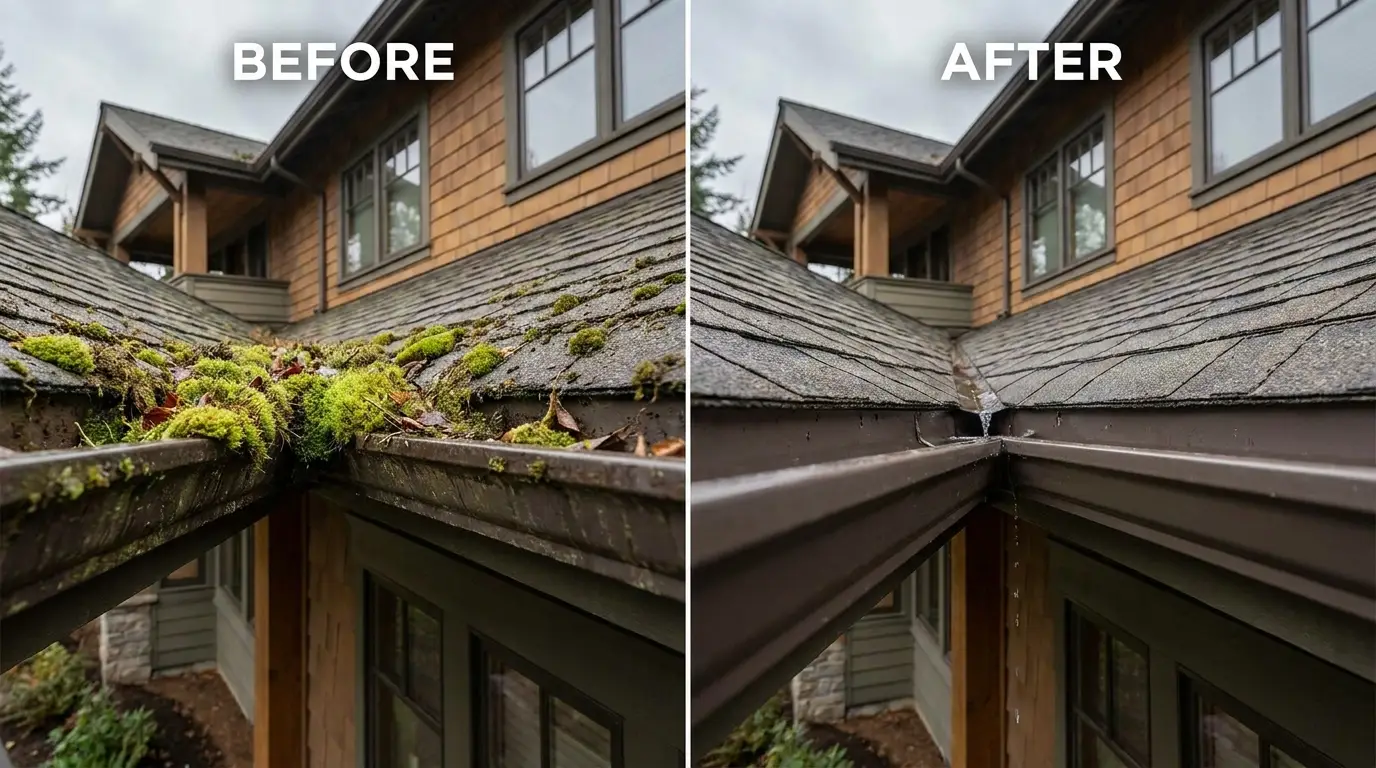
If you live in the Portland metro area, you already know that moss grows on just about everything. Roofs, sidewalks, fences, and yes, your gutters. The combination of mild temperatures, frequent rain, and heavy tree cover creates the perfect environment for moss to thrive on your gutter system. Left untreated, moss can block water flow, add unnecessary weight to your gutters, and accelerate the deterioration of the materials they attach to.
Understanding why moss grows on your gutters and what you can do about it will save you money on repairs and help your drainage system last longer. Portland homeowners deal with this issue more than almost anywhere else in the country, so knowing your options is essential.
Why Moss Grows on Portland Gutters
Moss needs three things to grow: moisture, shade, and organic debris. Portland delivers all three in abundance. The Willamette Valley receives around 36 to 44 inches of rain each year, with most of that falling between October and May. During those months, gutters stay damp for days or even weeks at a time, giving moss spores the moisture they need to establish themselves.
The heavy tree canopy that covers many Portland neighborhoods, especially in areas like Southwest Portland, Lake Oswego, and West Linn, adds shade that keeps gutters from drying out. Fallen leaves, pine needles, and small twigs collect in your gutters and create a bed of organic matter that acts like soil for moss.
North facing gutters are particularly vulnerable because they receive the least direct sunlight. If your home is surrounded by Douglas fir, big leaf maple, or western red cedar trees, expect to see moss growing on your gutters within a year or two if you are not actively preventing it.
The type of gutter material also plays a role. Aluminum gutters with a rough or painted exterior give moss something to grip. Even vinyl gutters can develop enough surface texture over time for moss to take hold once a thin layer of organic buildup forms.
How to Remove Moss from Your Gutters Safely
Removing moss from your gutters starts with a thorough cleaning. Scoop out all the loose debris by hand or with a gutter scoop, then flush the gutters with a garden hose to wash away remaining dirt and small moss fragments. For heavier moss growth that has attached itself to the exterior of the gutter, use a stiff bristle brush to scrub it away.
Avoid using a pressure washer directly inside the gutters. The force can dent aluminum, loosen seams, and push debris into your downspouts where it creates clogs that are harder to clear. If you use a pressure washer on the exterior surface, keep the nozzle at a safe distance and use a fan tip rather than a pinpoint stream.
For stubborn moss, a solution of equal parts white vinegar and water can be sprayed onto the affected areas and left to sit for 15 to 20 minutes before scrubbing. Some homeowners use diluted bleach, but vinegar is less likely to damage surrounding plants if it drips onto your landscaping below.
Safety should always come first when working on your gutters. Portland homes often have steep roof pitches, especially older Craftsman and Tudor style houses. If your gutters are more than one story off the ground or if your roof has a steep pitch, hiring a professional is the smarter choice. A fall from a ladder can result in serious injury, and professional gutter cleaners have the right equipment and training to work safely at height.
Preventing Moss from Coming Back
Cleaning moss off your gutters solves the immediate problem, but prevention is what keeps it from returning every season. The most effective long term solution that Portland homeowners use is zinc strip installation. Zinc strips are thin metal strips that attach along the top edge of your roof, just below the ridge cap. When rain flows over the zinc, it releases zinc carbonate, a natural compound that inhibits moss and algae growth on the surfaces below.
Zinc strips work well for both your roof and your gutters. As rainwater carries the zinc compound down the roof and into the gutters, it creates an environment where moss cannot establish itself. The strips typically last 10 to 20 years before needing replacement, making them a cost effective investment.
Copper strips work on the same principle and tend to last even longer, though they cost more upfront. Some homeowners in areas like Lake Oswego and Tigard have opted for copper strips as a long term solution that also adds a subtle design element to their roofline.
Beyond zinc or copper strips, regular gutter maintenance is the foundation of moss prevention. We recommend cleaning your gutters at least twice a year in the Portland area, once in late fall after the leaves have dropped and again in early spring. Keeping debris out of your gutters eliminates the organic material that moss needs to grow.
Trimming back tree branches that hang over your roof and gutters also helps significantly. More sunlight means faster drying times after rain, which makes it much harder for moss to get established. Even trimming branches back a few feet can make a noticeable difference.
Installing gutter guards is another layer of protection. While gutter guards are primarily designed to keep leaves and debris out, they also reduce the amount of organic matter that moss can feed on. Combined with zinc strips and regular maintenance, gutter guards can virtually eliminate moss problems on your gutter system.
Portland homeowners who take a proactive approach to moss prevention spend far less on gutter repairs over the life of their home. If you are seeing moss buildup on your gutters and want professional help with removal and prevention, give us a call for a free inspection. We will assess your situation and recommend the best approach for your property.