If you own a home in Oregon, moss is not a question of if but when. The Pacific Northwest climate creates ideal conditions for moss growth on roofs, and once moss takes hold, it spreads to your gutters and downspouts. What starts as a thin green layer can eventually cause serious damage to your roofing materials, block your drainage system, and lead to expensive repairs. Understanding how moss affects your roof and gutters is the first step toward keeping your home protected.
Moss thrives in the conditions that define western Oregon. Cool temperatures, persistent moisture, limited direct sunlight, and an abundance of airborne spores create a perfect environment for moss to colonize shingle surfaces. North facing roof slopes are especially vulnerable because they receive the least sunlight throughout the year. Homes surrounded by mature trees in neighborhoods like Lake Oswego, West Linn, Milwaukie, and the west hills of Portland often see moss growth within just a few years of a new roof installation.
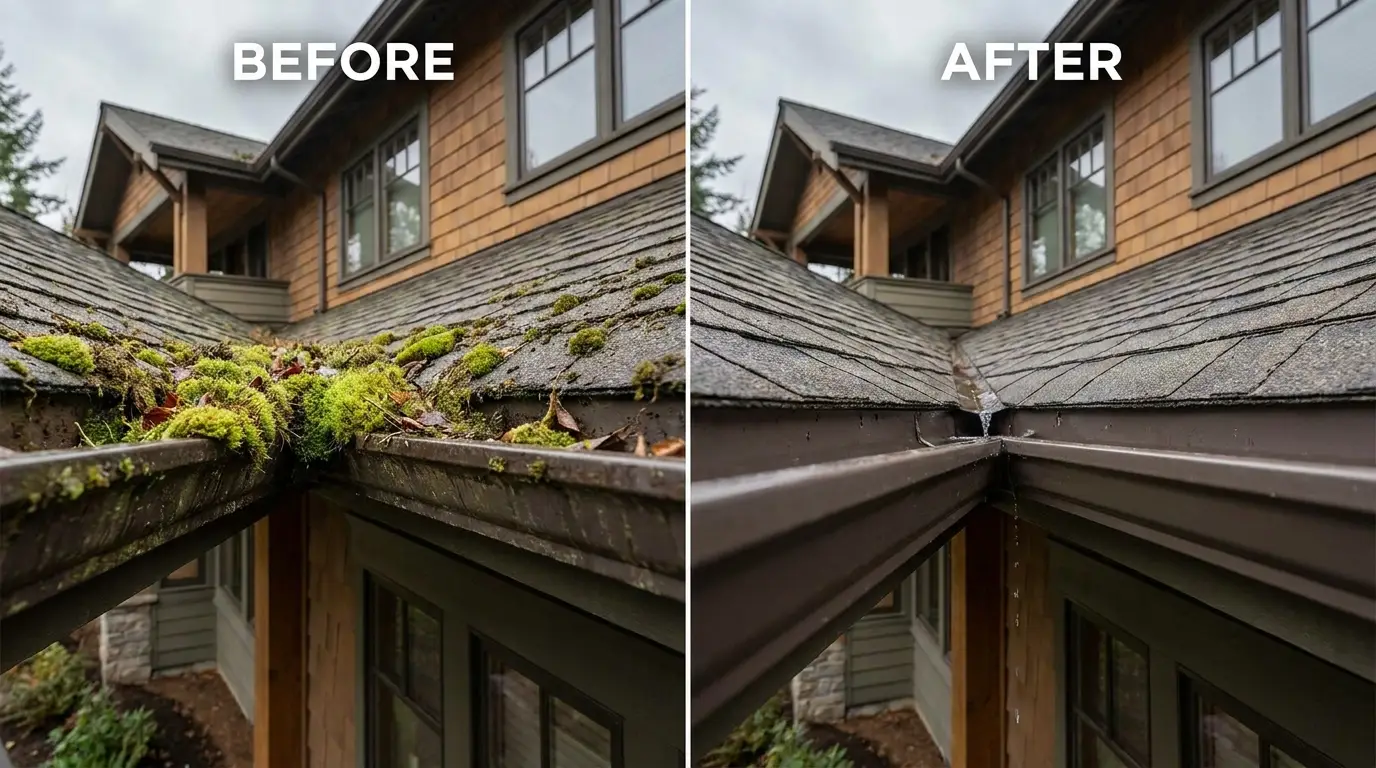
How Moss Damages Your Roof and Gutter System
Moss damages asphalt shingles in a way that many homeowners underestimate. As moss grows, its root structures work their way beneath the edges of shingles and lift them away from the roof deck. This creates gaps where rainwater can penetrate the underlayment and reach the plywood sheathing below. Over time, this moisture intrusion leads to wood rot, mold growth, and structural deterioration that is far more costly to repair than the moss itself.
The lifting action also makes shingles more vulnerable to wind damage. During the strong winter storms that hit the Portland metro area between November and March, shingles loosened by moss are more likely to crack, curl, or blow off entirely. What looks like storm damage is often the result of moss that weakened the shingle bond months earlier.
Moss holds moisture against the roof surface like a sponge. On a healthy roof, rainwater runs off quickly and the surface dries between storms. A moss covered roof stays damp for days or even weeks at a time during Oregon's wet season. This constant moisture accelerates the breakdown of the granule coating on asphalt shingles, reducing their ability to reflect UV light and shortening the overall lifespan of the roof.
The problems extend beyond the roof surface. As moss grows thick, chunks break free during rainstorms and wash into the gutters. Moss debris is dense and fibrous, and it accumulates in gutters much faster than ordinary leaves and pine needles. Once moss builds up in your gutters, it forms a dense mat that traps additional debris and blocks the flow of water toward the downspouts.
Clogged gutters cause water to back up and overflow, which defeats the entire purpose of having a gutter system. Overflowing water runs down the exterior walls of your home, stains siding, and pools around the foundation. In severe cases, backed up water can work its way under the roof edge and into the soffit or attic space. Moss also clogs downspout openings and the downspouts themselves, creating blockages that are difficult to clear without professional equipment.
Prevention Methods That Work in Oregon
Preventing moss growth is more effective and less expensive than removing it after it has established itself. Several methods work well in the Portland metro climate, and combining more than one approach gives the best results.
Zinc strips are one of the most popular and effective long term prevention methods. These thin strips of zinc metal are installed along the ridge line of the roof, just below the ridge cap. When rain washes over the zinc, it releases trace amounts of zinc carbonate that flow down the roof surface and create conditions that inhibit moss growth. Zinc strips are inexpensive, easy to install during a gutter or roofing project, and typically remain effective for 15 to 20 years.
Copper strips work on the same principle and are slightly more effective, though they cost more. Some homeowners with copper gutters choose copper ridge strips for a consistent look across the entire roofline.
Tree trimming is another important prevention step. Reducing the shade canopy over your roof allows more sunlight to reach the shingle surface, which dries the roof faster between rainstorms and makes the environment less hospitable for moss. Trimming branches back at least six feet from the roof edge also reduces the volume of leaves and organic debris that feeds moss growth.
Regular gutter cleaning plays a direct role in prevention as well. When gutters are full of decomposing leaves and organic material, they become a staging area for moss that can spread back onto the roof edge. Cleaning your gutters at least twice per year, once in late fall and once in late spring, removes the organic matter that moss needs to thrive.
Safe Removal and When to Call a Professional
If moss has already taken hold on your roof, removal should be done carefully to avoid damaging the shingles. Pressure washing is one of the most common mistakes homeowners make. High pressure water strips the protective granules from asphalt shingles and can force water beneath the shingle edges, causing the same kind of damage that moss itself creates. Pressure washing a roof will void most shingle manufacturer warranties.
The safest approach is to apply a moss killing solution and allow it to work over a period of weeks. Products containing zinc sulfate or potassium salts of fatty acids are effective and widely available at Portland area hardware stores. The solution is applied on a dry day, left to sit, and the dead moss is then gently brushed away with a soft bristle broom, working from the ridge down toward the eaves to avoid lifting shingle edges.
For roofs with heavy moss growth, or for homeowners who are not comfortable working at height, professional removal is the safer choice. A qualified roofing or gutter professional has the equipment and experience to remove moss without damaging shingles, and they can inspect the roof for any underlying damage that the moss may have caused.
At Brothers Gutters Oregon, we see the effects of moss on gutters every day across Oregon's coast. We clean moss packed gutters, install zinc strips during gutter projects, and help homeowners set up a maintenance schedule that keeps moss from becoming a recurring problem. If your gutters are clogged with moss debris or you are noticing overflow during rainstorms, give us a call for a free inspection.