A clogged downspout can turn your entire gutter system into a problem instead of a solution. When a downspout blocks up, water backs into the gutter run, overflows at the edges, and pours down the side of your house. In Oregon, where rain can fall for days at a time, a single clogged downspout during November can send hundreds of gallons of water straight into your foundation soil before you even notice the problem.
The good news is that most downspout clogs can be cleared with basic tools and a little patience. The key is identifying where the blockage is, choosing the right method to clear it, and knowing when the problem is beyond what you should handle yourself.
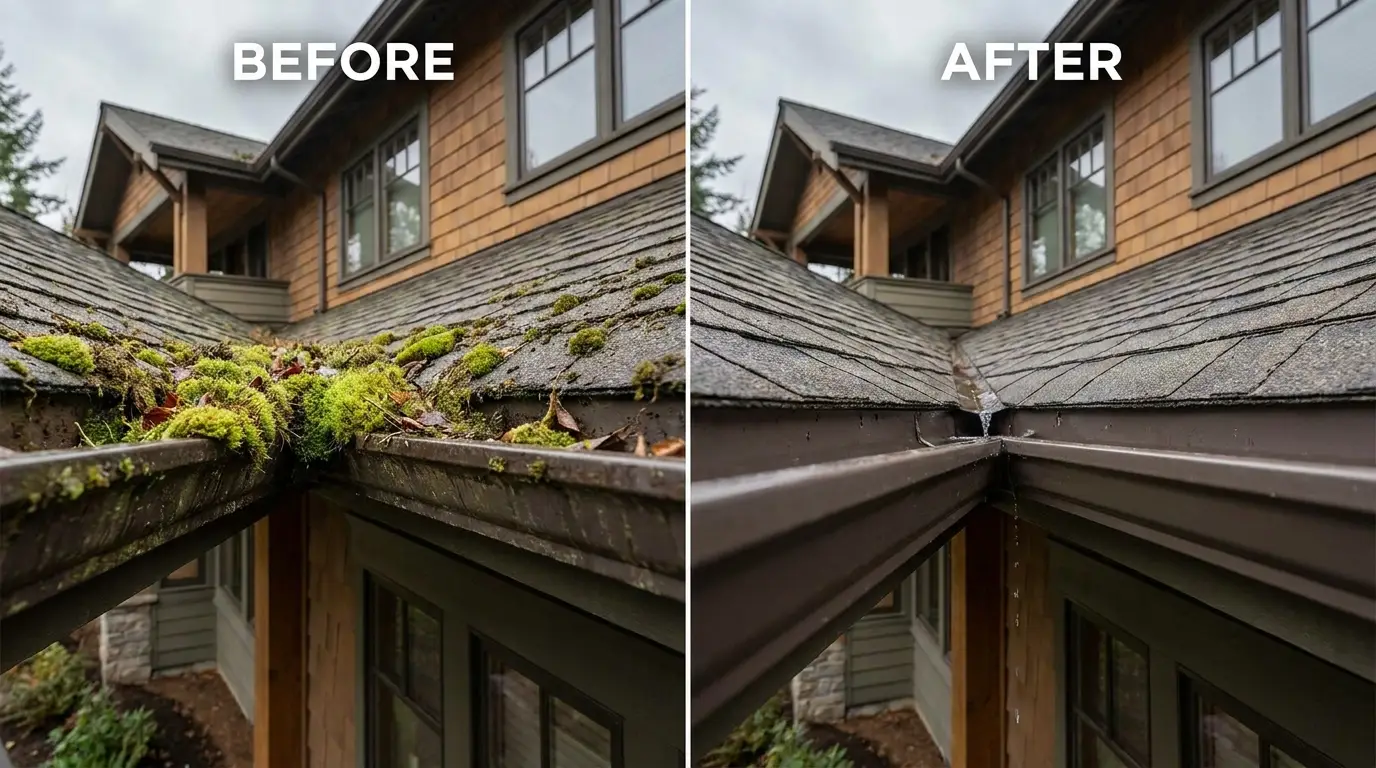
Signs of a Clogged Downspout and Common Causes
The most obvious sign of a clogged downspout is water overflowing from the gutters directly above it. If your gutters are clean but still spilling over at a specific section, the downspout below that section is almost certainly blocked. Other signs include little or no water coming from the downspout outlet during rain, water stains or splash marks on the siding near the downspout seams, and a gurgling sound coming from the downspout during a storm.
In the Portland metro area, the most common causes of downspout clogs are predictable. Decomposed leaves and pine needles form a dense mat that compacts at the elbows where the downspout changes direction. Moss fragments wash off the roof and accumulate in the same spots. Small twigs and seed pods from Douglas fir, big leaf maple, and oak trees get caught at narrow points and trap additional debris behind them. Over time, this material packs together into a solid plug that water cannot push through on its own.
The elbows at the top and bottom of the downspout are the most common clog points. The top elbow, where the downspout transitions from the gutter outlet to the vertical run, catches debris as it washes down from the gutter. The bottom elbow, where the downspout transitions to the discharge point, collects material that settles out of the water flow as it slows down.
Methods to Clear the Blockage
Start with the simplest approach and work your way up. Begin by checking the downspout outlet at the gutter. Remove any visible debris from the top of the downspout where it connects to the gutter. Sometimes the clog is right at the surface and can be pulled out by hand or with a pair of pliers.
If the clog is deeper, try flushing with a garden hose. Insert the hose into the top of the downspout and turn the water on at full pressure. If the clog is loose, the water pressure will push it through. You may need to work the hose up and down to break through the debris. If water backs up and overflows out the top instead of pushing through, the clog is more compacted and you will need a different approach.
A plumber snake or drain auger is the next tool to try. Feed the snake into the top of the downspout and rotate it as you push it down. The auger tip will bore through compacted debris and break it apart. Once you feel the resistance give way, pull the snake back out and flush the downspout with the hose to clear the remaining material.
Tapping along the outside of the downspout with a rubber mallet can help loosen debris that is stuck to the walls. Work from the bottom up, tapping firmly but not hard enough to dent the aluminum. This works well for clogs caused by wet leaves that have dried and adhered to the inside surface.
If none of these methods work, the downspout sections may need to be disassembled. Most residential downspouts are held together with sheet metal screws or rivets at each joint. Removing the screws at the elbow sections lets you separate the pieces, clear the clog directly, and reassemble the system. This is straightforward but requires a ladder and some comfort working at height.
Underground Clogs and When to Call a Professional
Some homes in the Portland area have downspouts that connect to underground drain lines. These buried pipes carry water away from the foundation to a pop up emitter, a French drain, or a connection to the public storm sewer. When the clog is in the underground section, clearing it from above is rarely effective.
Signs of an underground clog include water backing up out of the downspout connection at ground level, soggy spots in the yard along the drain line path, or water surfacing near the foundation during rain. Underground clogs are often caused by root intrusion, crushed or collapsed pipe sections, or years of sediment buildup.
Call a professional when the clog is underground, when the downspout is more than two stories high, when you have already tried the methods above without success, or when the downspout has visible damage that suggests a structural problem rather than a simple blockage. A professional can use a camera to inspect the line, a power auger to clear stubborn clogs, and the right tools to access downspouts that are difficult to reach safely.
Prevention is the best long term strategy. Gutter guards reduce the amount of debris that enters the system in the first place. Regular gutter cleaning in late fall and late spring catches material before it migrates into the downspouts. Flushing each downspout with a hose during your cleaning routine confirms the lines are clear while you are already on the ladder. These small steps keep the entire system flowing and save you from dealing with emergency clogs during the worst of Oregon winter weather.