A new roof is one of the biggest investments you can make in your Portland home. After spending thousands of dollars on quality shingles and professional installation, the last thing you expect is water pouring over the edge of your gutters or pooling around your foundation. Yet this is exactly what happens to many Oregon homeowners in the months following a roof replacement. The gutters that worked fine before the reroofing project suddenly develop problems, and the cause is almost always related to changes the roofing crew made during the job.
Roofing contractors focus on the roof. That is their specialty, and most do excellent work on the roofing surface itself. But the transition zone where the roof meets the gutter is a critical area that often gets overlooked or handled carelessly during a reroof. Understanding the most common gutter problems that arise after a roof replacement can help you catch issues early, before they cause water damage to your fascia, siding, or foundation.
Misalignment, Drip Edge, and Shingle Overhang Issues
The most frequent complaint homeowners have after a reroof is that water overshoots the gutter during rainstorms. This happens when the relationship between the roof edge and the gutter is altered during the roofing process. Several factors can contribute to this problem.
Shingle overhang is one of the biggest culprits. Roofing manufacturers specify how far shingles should extend past the edge of the roof deck, typically between three quarters of an inch and one and a half inches. When roofers extend the shingles too far past the drip edge, water runs off the shingle at a point that is beyond the opening of the gutter. Instead of dropping into the channel, the water shoots over the front lip and cascades down the side of the house. This problem is especially noticeable during heavy rainfall, which is a regular occurrence in the Portland metro area from fall through spring.
Drip edge installation is another common source of trouble. The drip edge is a thin metal flashing that sits along the edge of the roof deck, directing water into the gutter rather than allowing it to wick back under the shingles or along the fascia board. When a roofing crew installs new drip edge during a reroof, they sometimes position it too far out from the fascia or at the wrong angle. If the drip edge does not direct water into the gutter channel, water can drip behind the gutter instead, running down the fascia and causing rot over time.
In some cases, the roofing crew removes the old drip edge and does not install a replacement at all. Without drip edge, water follows the underside of the roof deck through capillary action and runs down the fascia board behind the gutter. This hidden water flow is particularly damaging because homeowners often do not notice it until the fascia is already soft and deteriorating. In Oregon's wet climate, fascia rot can progress quickly once it starts.
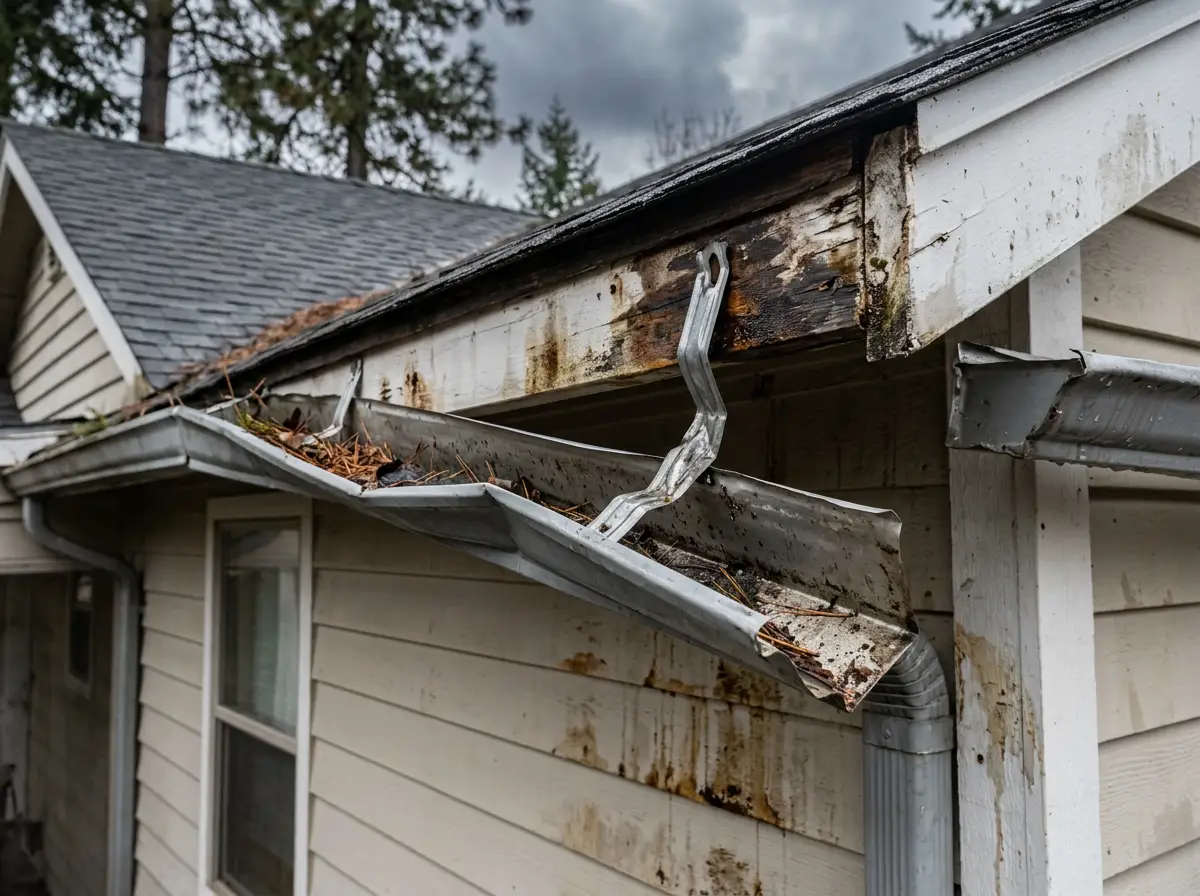
Gutter misalignment is also common after a reroof. Roofing crews need access to the roof edge, and they sometimes bump, shift, or lean ladders against the gutters during the project. Even a small change in the gutter's position can affect how water enters the channel. If the gutter is pushed away from the fascia even slightly, a gap opens up that allows water to run behind the gutter. If the gutter is knocked out of its proper pitch, water pools in sections of the channel instead of flowing toward the downspouts.
Damaged Hangers and Hidden Problems
Gutter hangers are the brackets that secure the gutter to the fascia board. During a roof replacement, roofers may step on the gutters while working along the eaves, set heavy bundles of shingles on the roof edge directly above the gutter line, or use pry bars near the fascia that stress the hangers. Any of these actions can bend, loosen, or break the hangers that hold the gutter in place.
Damaged hangers cause the gutter to sag between attachment points. These low spots collect standing water and debris, adding weight that pulls the gutter further away from the fascia. Over time, the problem compounds. A gutter that sags in one area puts additional stress on the hangers on either side, and those hangers can fail as well. In a state where gutters regularly handle months of continuous rain, even a small sag can lead to significant water management problems.
Roofers also sometimes drive nails or screws through the gutter during the installation of new flashing or drip edge. These penetrations create leak points that are difficult to spot from the ground. The holes may be small enough that they only drip during sustained rain, which means the leak can go undetected through the dry summer months and only reveal itself once the fall rains arrive in earnest.
Another hidden issue involves the fascia board itself. If the old roof had a leak near the eaves, the fascia may have water damage that was concealed by the old roofing material. The roofing crew may or may not address this damage during the reroof. If the gutter is reattached to a weakened fascia board, the hangers will not hold securely, and the gutter will gradually pull away from the house.
What to Inspect After a Reroof in Oregon
Once your new roof is complete, it is worth taking the time to inspect the gutter system before the rainy season begins. Here is what to look for.
- Walk around the house and check that the gutters are sitting flush against the fascia with no visible gaps behind them.
- Look at the shingle overhang from below. The shingles should extend past the drip edge but not so far that they overshoot the gutter opening.
- Verify that drip edge is installed along all eaves and that it angles into the gutter channel, not away from it.
- Check for any visible dents, bends, or sagging in the gutter runs, especially near areas where ladders were placed during the roofing project.
- Run water from a garden hose along the roof edge and watch how it enters the gutter. Look for any spots where water drips behind the gutter or overshoots the channel.
- Inspect each hanger to make sure it is secure and that the gutter is properly pitched toward the downspouts.
- Look for any nail or screw holes in the gutter that were not there before the reroof.
If you find problems, it is important to address them promptly. Portland's rainy season does not wait for repairs, and water damage to fascia boards, siding, and foundations accelerates once it begins. In many cases, the roofing contractor will correct gutter related issues if you bring them to their attention while the project warranty is still active. For problems that require gutter expertise, a dedicated gutter professional can realign, resecure, or replace damaged sections.
At Brothers Gutters Oregon, we regularly help homeowners throughout the Portland metro area resolve gutter issues that surface after a roof replacement. Whether you need a full inspection, hanger replacement, realignment, or new seamless gutters to replace a system damaged during a reroof, we can get your water management back on track before the rain returns. Contact us for a free evaluation of your gutter system.