The fascia board is the long wooden board that runs along the lower edge of your roofline, right behind your gutters. Most homeowners never think about it because the gutters cover most of it from view. But the fascia is what your gutters are attached to, and when it starts to rot or deteriorate, the entire gutter system is at risk. In Oregon's damp climate, fascia damage is one of the most common issues we see on homes across Oregon's coast.
Warning Signs You Can Spot from the Ground
You do not need a ladder to notice many of the early signs of fascia trouble. Start by walking around your home and looking up at the roofline. Here is what to watch for:
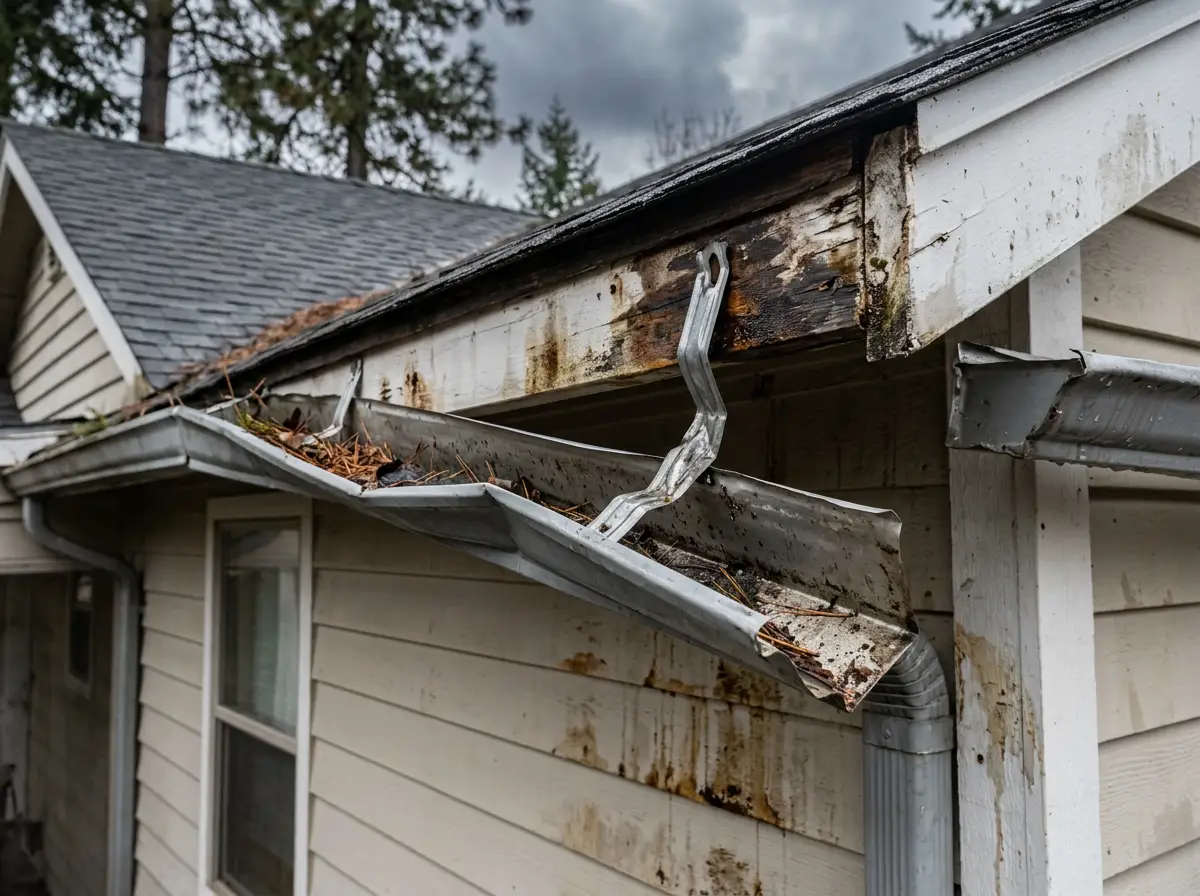
- Gutters pulling away from the house or sagging in sections. When the fascia behind the gutter softens, the hangers lose their grip and the gutter starts to separate. You will see gaps between the back of the gutter and the roofline.
- Paint peeling or bubbling on the fascia board where it is visible above or below the gutter. Moisture trapped behind the paint causes it to lose adhesion, and you will see curling or flaking paint even if the rest of the trim looks fine.
- Dark staining or discoloration on the fascia. This usually indicates prolonged moisture exposure. You may also see dark streaks running down the fascia from a gutter that has been overflowing or leaking at a seam.
- Visible crumbling or missing pieces of wood. By the time the fascia has deteriorated to this point, the damage is advanced and needs immediate attention.
- Insects or small animals entering at the roofline. Carpenter ants, wasps, and even squirrels will exploit soft or rotted fascia to gain access to the space behind it.
In neighborhoods throughout Portland, Milwaukie, Oregon City, and Clackamas, we regularly see these signs on homes that are 20 years or older, especially when the original gutters were not maintained or replaced on schedule.
The Thumb Test and Other Close Inspections
If you are comfortable on a ladder and can safely reach your roofline, there is a simple hands on test that tells you a lot about the state of your fascia. Press your thumb firmly into the wood. Solid fascia will resist the pressure and feel hard. Damaged fascia will give under your thumb, feeling spongy or soft. In severe cases, your thumb will push right into the wood.
Pay special attention to the areas around gutter seams, end caps, and corners. These are the spots where water is most likely to escape the gutter and contact the fascia directly. The bottom edge of the fascia board is another common trouble spot because water that runs down the face of the board collects along the bottom and accelerates rot there.
On homes with aluminum or vinyl fascia wrap, the damage can be hidden underneath. The metal or vinyl covering may look fine while the wood underneath is rotting away. If your gutters are pulling loose even though the fascia covering looks intact, there is a good chance the underlying wood has failed. A professional inspection can confirm this without causing damage to the covering.
North facing walls deserve extra attention in the Portland area. These sides of the house receive less sunlight and stay damp longer, especially during the months from October through April when cloud cover is persistent. Moss growth on north facing rooflines and fascia is common, and moss holds moisture against the wood, speeding up the deterioration process.
Repair Options and Costs
When fascia damage is caught early, the repair is straightforward. A section of damaged board is removed and replaced with new lumber, typically a one by six or one by eight depending on the original size. The new board is primed and painted to match the existing trim. If the damage is limited to a few feet, the cost is modest and the work can often be done at the same time as a gutter replacement or repair.
For more extensive damage that spans large sections of the roofline, the cost increases because more material and labor are involved. In some cases, the soffit and underlying rafter tails may also need attention if the rot has spread beyond the fascia board itself. Homes in areas with heavy tree cover, like those in Southwest Portland, West Linn, and parts of Milwaukie, tend to have more widespread damage because organic debris traps moisture along the roofline for extended periods.
Some homeowners choose to upgrade from bare wood fascia to composite or PVC fascia board during the replacement. These materials resist moisture and do not rot, which makes them a smart long term choice in a climate as wet as Oregon's. The upfront cost is higher than wood, but the material will last significantly longer without needing paint or ongoing maintenance.
The connection between fascia health and gutter performance cannot be overstated. Gutters are only as reliable as what they are attached to. If your fascia is compromised, even brand new gutters will eventually pull loose, leak, or fail to protect your home the way they should. Any gutter inspection or installation should include a careful look at the fascia behind it. Addressing both at the same time saves money, prevents callbacks, and gives you a roofline that is solid and sealed against the rain that defines life in the Pacific Northwest.