Gutters do not last forever. Even the best installed system will eventually wear out after years of exposure to rain, wind, debris, and temperature swings. The challenge for homeowners is knowing when their gutters have crossed the line from needing a simple repair to requiring a full replacement. Catching the warning signs early can save you thousands of dollars in water damage to your foundation, siding, and landscaping.
Here are seven signs that your gutters may be ready for replacement, along with guidance on when a repair might be enough and when it is time to invest in a new system.
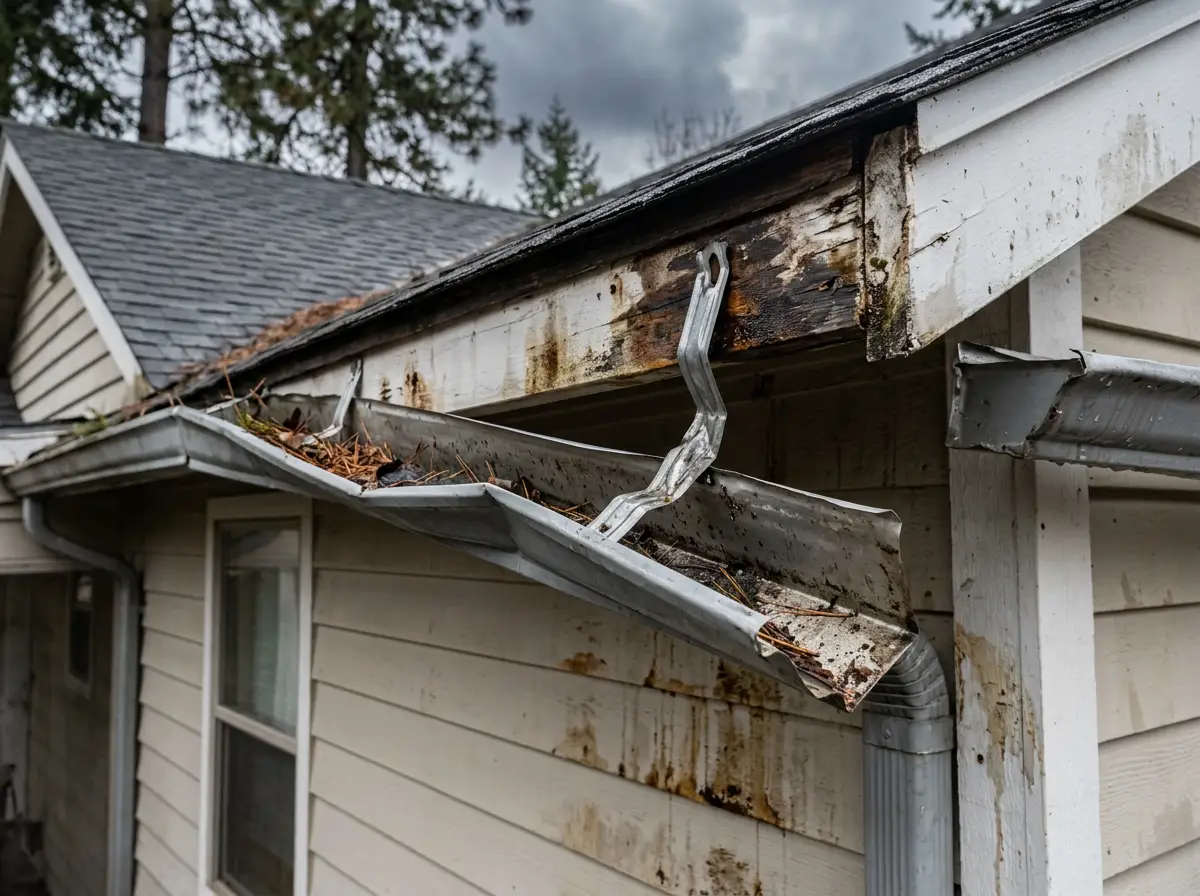
Seven Warning Signs to Watch For
The first sign is visible cracks or splits in the gutter channel. Small cracks may seem minor, but in Oregon's rainy climate, even a hairline crack allows water to escape and run down your fascia board. Over time, these cracks expand as water freezes and thaws during cold snaps. If you notice cracks in multiple sections, patching each one individually becomes impractical and a full replacement is more cost effective.
The second sign is gutters pulling away from the house. When gutters separate from the fascia, it usually means the hangers or spikes that hold them in place have failed, or the fascia board itself has rotted. You may notice gaps between the gutter and the roofline, or see the gutter tilting outward. If the fascia is still in good condition, a professional can sometimes rehang the gutters with new hardware. But if the fascia is soft, spongy, or visibly decayed, you are looking at a larger project that involves replacing the fascia and installing new gutters.
The third sign is sagging or uneven gutters. Gutters are installed with a deliberate slope that directs water toward the downspouts. When sections begin to sag, water pools in the low spots instead of draining. Standing water adds weight that accelerates the sagging, creating a cycle that gets worse over time. Sagging is often caused by deteriorating hangers, but it can also indicate that the gutter material itself has weakened and lost its structural rigidity.
The fourth sign is peeling paint or rust spots on the gutters. If the protective finish on your gutters is flaking or bubbling, the underlying metal is exposed to moisture and will begin to corrode. On steel gutters, orange rust stains are an obvious indicator. On aluminum gutters, look for white chalky residue or pitting on the surface. These cosmetic issues are early warnings that the material is breaking down.
The fifth sign is water damage or staining on your siding, soffit, or foundation. If you see vertical streaks of discoloration on your siding directly below the gutter line, water is overflowing or leaking from the gutters. Check your foundation walls for water stains, mineral deposits, or damp patches after rainstorms. Water pooling around the base of your home is a serious concern because it can lead to basement flooding and foundation settlement.
The sixth sign is mold or mildew on your exterior walls near the roofline. When gutters leak behind the fascia or overflow consistently, the constant moisture creates ideal conditions for mold growth. In Oregon's humid climate, mold can spread quickly once it takes hold. If you see dark spots or fuzzy growth on your siding or soffit near the gutter line, investigate the gutter system as a likely source of the moisture problem.
The seventh sign is that your gutters are more than 20 years old. Most aluminum gutters have a functional lifespan of 20 to 30 years. Vinyl gutters may only last 8 to 12 years. Steel gutters fall somewhere in between at 15 to 20 years. If your gutters are approaching or exceeding these age ranges, it is wise to have a professional inspection even if you have not noticed obvious problems. Wear and corrosion often develop in areas that are difficult to see from the ground.
Repair vs Replace: Making the Call
Not every gutter problem requires a full replacement. In many cases, targeted repairs can extend the life of your system by several years. Here is a general framework for deciding between repair and replacement.
Repair is usually the right choice when the damage is limited to a small area, such as a single section with a leak, a few loose hangers, or a disconnected downspout. If the overall system is in good condition and the gutters are less than 15 years old, fixing the problem area is often the most cost effective approach.
Replacement makes more sense when you are dealing with widespread issues. If multiple sections are cracking, leaking, or sagging, the cost of individual repairs adds up quickly. At a certain point, you will spend nearly as much patching an old system as you would installing a new one, without getting the benefit of a fresh start with modern materials and techniques.
Another factor to consider is the type of gutters you currently have. If you have an older sectional system with numerous joints and connections, upgrading to seamless gutters during a replacement gives you a fundamentally better system. Seamless gutters have fewer failure points, handle water more efficiently, and require less maintenance over their lifespan.
Fascia condition is also important. If your fascia boards are rotting or damaged, you will need to address that before new gutters can be installed. A good gutter company will inspect the fascia as part of the estimate and include any necessary repairs in the project scope.
Finally, consider the long term cost. A gutter system that needs frequent repairs every year or two is costing you more than just the repair bills. Each time your gutters fail, your home is exposed to water damage that may not be immediately visible but accumulates over time. A new gutter system with a 20 to 30 year lifespan provides peace of mind and protects your home's value.
Brothers Gutters Oregon provides free inspections and honest assessments for homeowners throughout the Portland metro area. If you are seeing any of these warning signs, contact us to schedule an evaluation and get a clear recommendation on whether repair or replacement is the right path for your home.