If you have ever watched a gutter crew working at a neighbor's house, you may have noticed a large machine mounted on a truck or trailer in the driveway. That machine is the reason seamless gutters exist. It takes a flat coil of metal and transforms it into a finished gutter right at the job site, custom cut to the exact measurements of the home. For Portland homeowners considering new gutters, understanding how this process works can help explain why seamless gutters outperform traditional sectional systems, especially in a climate that sees as much rain as Oregon does.
The seamless gutter machine is the centerpiece of every professional gutter installation. It is a portable roll forming system that typically measures about 20 feet long and rides on the back of a specially equipped truck. Inside the machine is a series of metal rollers arranged in stations. Each station bends the metal a little more than the previous one, gradually shaping a flat strip into the familiar gutter profile. The entire process happens in a single pass, producing a finished gutter that can stretch 100 feet or more without a single seam.
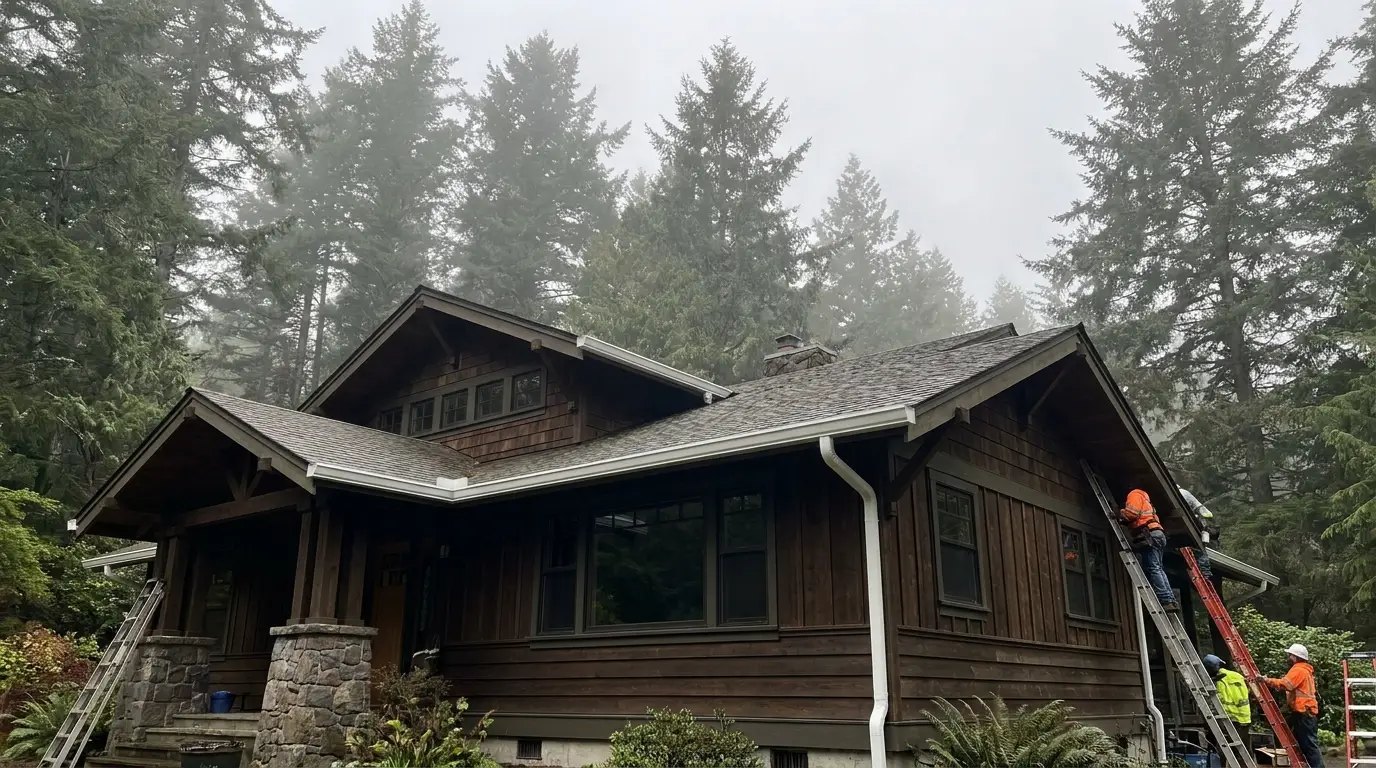
The Roll Forming Process and Materials
The process begins with a large coil of flat metal stock, most commonly aluminum. The coil is loaded onto a spindle at one end of the machine and fed into the first set of rollers. As the metal moves through each roller station, it is bent incrementally. One station may create the back edge of the gutter, the next forms the bottom, and subsequent stations shape the front lip and the decorative profile. By the time the metal exits the final set of rollers, it has been transformed from a flat strip into a fully shaped gutter channel.
Aluminum is the most popular coil stock for residential gutter installations in Oregon. It is lightweight, resistant to rust, and available in dozens of factory applied colors that will not peel or fade for years. The coils typically come in widths of 11.75 inches for standard 5 inch K style gutters or 15 inches for 6 inch gutters. The metal thickness, called gauge, is usually .027 or .032 inches. Thicker gauge aluminum costs more but holds up better to heavy debris loads and ladder pressure, which matters in a state where falling branches and pine needles are a constant concern.
Copper and galvanized steel coils can also be run through the machine, though these materials are less common for residential work in the Portland metro area. Copper gutters develop a distinctive green patina over time and last for decades, but they come with a significantly higher price tag. Steel is stronger than aluminum but will eventually rust if the protective coating is scratched or worn, making it a less practical choice in a wet climate.
On Site Fabrication and Custom Fit
The biggest advantage of the seamless gutter machine is that it comes to your property. Rather than assembling precut sections from a hardware store, the installer measures each run of your roofline and fabricates the gutter to that exact length on the spot. A 47 foot section of roof gets a 47 foot gutter with no joints, no connectors, and no sealant in between. The only seams in a seamless system occur at inside corners, outside corners, and downspout outlets where separate fittings are necessary.
This custom fabrication process eliminates the primary weakness of sectional gutters. Every joint in a sectional system is a potential leak point. Sealant degrades over time, connectors loosen, and water finds its way through. In Portland, where gutters handle water for the better part of eight months each year, those joints are under relentless stress. Seamless gutters remove that vulnerability by reducing the number of joints to the bare minimum.
On site fabrication also means less waste. The installer cuts only what is needed for each run, so there are no leftover sections or awkward splices to deal with. The result is a cleaner installation that follows the contours of the roofline precisely, with proper pitch toward each downspout location.
Why Seamless Matters for Oregon Homes
Oregon's climate puts extraordinary demands on gutter systems. Portland averages around 43 inches of rain per year, most of it falling between October and May. During that stretch, gutters are working almost continuously. They collect water from the roof, channel it through the gutter run, direct it into the downspouts, and deliver it to the drainage system away from the foundation. Any weakness in that chain leads to problems: fascia rot, foundation erosion, basement moisture, and landscape damage.
Seamless gutters handle this workload more reliably because the smooth interior channel allows water to flow without obstruction. In a sectional gutter, the raised edges of connectors and overlapping joints create small dams inside the channel. Debris catches on these obstructions, building up into clogs that block water flow. When a clog forms during a heavy November rainstorm, water backs up and overflows, pouring down the side of the house exactly where you do not want it.
The roll forming process also produces a structurally stronger gutter. Because each run is a single piece of metal, there are no weak points where sections overlap. This makes the gutter more resistant to sagging between hangers, which is especially important in the Pacific Northwest where snow and ice loads, though infrequent, can stress a gutter system when they do occur.
Portland area homes also deal with moss, lichen, and algae growth on both roofs and gutters. A seamless gutter with its smooth interior surface is easier to clean and less likely to harbor the organic buildup that thrives in the damp conditions west of the Cascades.
At Brothers Gutters Oregon, we bring our roll forming equipment directly to your property and fabricate every gutter to the exact dimensions of your home. The result is a gutter system built specifically for your roofline, engineered to handle the rain that defines life in the Pacific Northwest. If you are considering new gutters for your Portland area home, contact us for a free estimate and see the seamless gutter machine in action.