When you invest in new gutters for your home in Portland or anywhere across the Oregon metro area, you want to know that your investment is protected. A warranty should give you peace of mind, but not all gutter warranties are created equal. Some cover the materials for decades but leave you on your own if the installation fails. Others sound comprehensive on paper but include fine print that can void the coverage entirely. Understanding what to look for before you sign a contract will help you avoid surprises down the road and ensure you are actually getting the protection you expect.
Material Warranty vs Labor Warranty
The most important distinction in any gutter warranty is the difference between material coverage and labor coverage. These are almost always separate, and they are often provided by different parties.
The material warranty comes from the manufacturer of the gutter coil or the finished gutter product. For aluminum gutters, which are by far the most common type installed on homes in the Portland metro area, material warranties typically range from 20 years to a lifetime depending on the brand and the thickness of the aluminum. This warranty covers defects in the metal itself, such as premature corrosion, paint failure, or structural weakness that was not caused by external damage. If the aluminum develops holes or the factory finish peels within the warranty period under normal conditions, the manufacturer will replace the material.
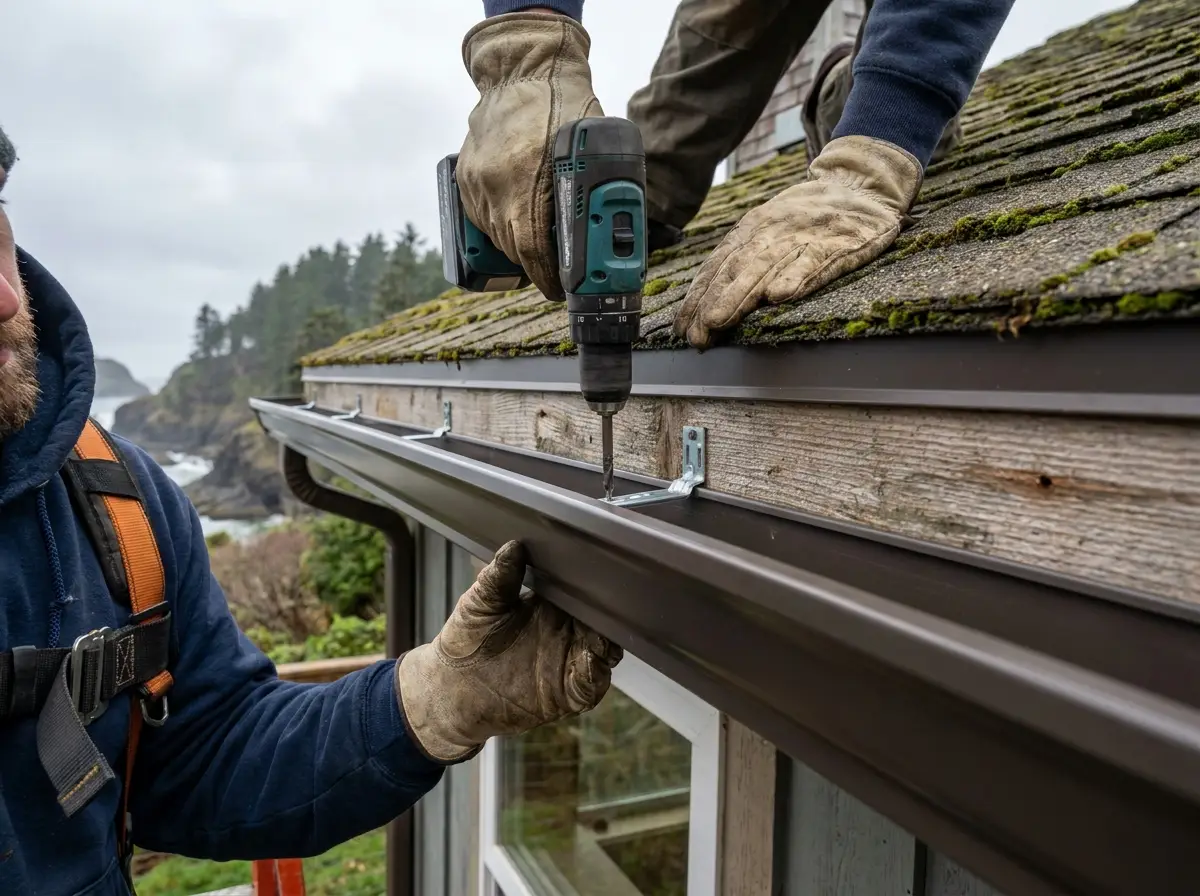
The labor warranty comes from the installer. This covers the workmanship of the installation, including proper slope, secure hanger placement, sealed seams, and correct downspout connections. Labor warranties vary widely between contractors. Some companies offer as little as one year of labor coverage while others provide five years or more. In Oregon, where heavy rain and wind put constant stress on gutter systems, a short labor warranty should raise questions about the installer's confidence in their own work.
A gutter system can fail because of bad materials or bad installation, but in practice, most problems that develop in the first few years are installation related. Hangers spaced too far apart, seams that were not sealed properly, or incorrect slope are all workmanship issues. If your labor warranty has already expired when these problems appear, you will be paying out of pocket to fix someone else's mistakes. Always ask for the labor warranty terms in writing before you agree to an installation.
Transferability and Long Term Value
If you plan to sell your home in the future, a transferable warranty adds real value. A transferable warranty means the coverage passes to the new homeowner when you sell. This can be a selling point during negotiations and gives the buyer confidence that the gutter system was installed by a reputable company that stands behind its work.
Not all warranties are transferable. Some manufacturers and installers limit coverage to the original purchaser only. Others allow a one time transfer but require you to notify them within a certain window after the sale. Read the terms carefully and ask the installer directly whether the warranty transfers and what steps are required to make that happen.
In the competitive Portland real estate market, being able to show a buyer documentation of a transferable gutter warranty can set your listing apart. It is a small detail that signals the home has been maintained by professionals who are willing to back their work long term.
What Voids a Gutter Warranty
Every warranty has exclusions, and knowing what can void your coverage is just as important as knowing what is covered. The most common exclusions in gutter warranties include the following.
- Damage from falling trees, branches, or other objects. If a Douglas fir limb drops onto your gutters during a winter storm, the manufacturer and installer will both consider that external damage, not a product defect.
- Modifications or repairs made by someone other than the original installer. If you hire a different contractor to adjust the slope or add a section, the original installer may void their labor warranty on the entire system.
- Failure to maintain the gutters. Most warranties require that you keep the gutters clean and free of debris. If a clog causes water to back up and damage a seam, the installer can argue that the failure was caused by neglect rather than workmanship. In Oregon, where leaf and needle debris accumulates quickly, this means you need to clean your gutters at least twice per year to keep your warranty intact.
- Damage from ice, snow, or ladder use. Leaning a ladder directly against the gutter can dent or bend it, and the resulting damage will not be covered. Ice and snow damage are typically excluded as acts of nature.
- Normal wear and tear. Paint fading from UV exposure over many years is generally considered normal aging and is not covered, even under a material warranty that covers paint defects.
The best approach is to read the full warranty document before installation begins. Do not rely on a verbal summary from a salesperson. Ask for the written terms, read the exclusions section, and make sure you understand what is required of you as the homeowner to keep the coverage valid. A reputable gutter company will be happy to walk you through the warranty in detail and answer your questions. If a contractor is vague about warranty terms or reluctant to put them in writing, that is a strong signal to consider other options.
Your gutters protect your foundation, siding, and landscaping from water damage. The warranty protects your investment in those gutters. Make sure both are solid before the first rain hits.