Choosing a gutter guard for your Oregon home usually comes down to two options: traditional gutter screens or micro mesh guards. Both reduce the amount of debris that enters your gutters, but they work differently and perform differently depending on the type of debris around your property. Understanding the strengths and weaknesses of each will help you make the right choice for your home and your budget.
How Gutter Screens Work
Gutter screens are made from perforated metal or expanded aluminum with openings typically between a quarter inch and a half inch in diameter. They sit on top of the gutter trough or snap into the front lip and rest against the back edge. Screens are simple to install, relatively inexpensive, and effective at blocking large debris like leaves, twigs, and seed pods.
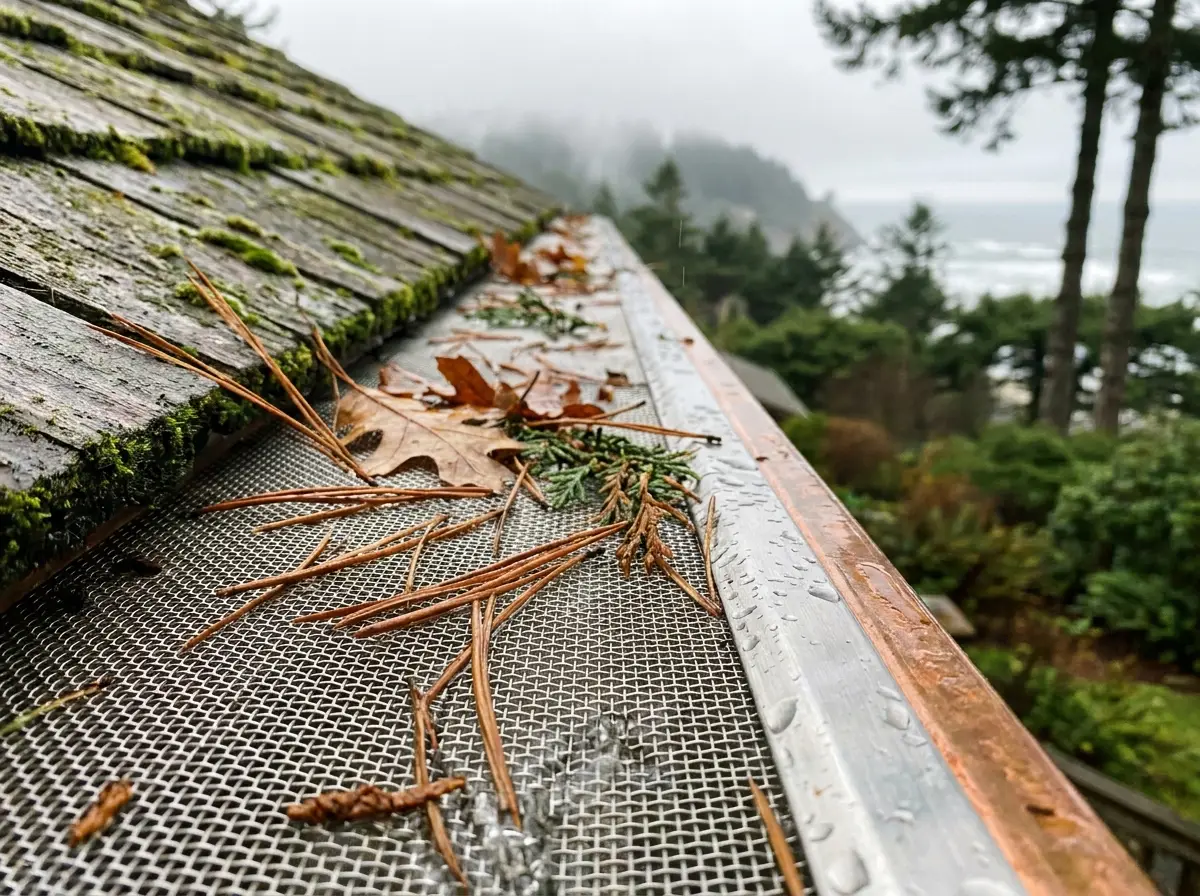
The limitation of screens shows up when you deal with smaller debris. Pine needles, fir needles, and small leaf fragments pass right through the openings and accumulate inside the gutter. In Oregon, where Douglas fir and western red cedar are everywhere, this is a significant issue. A screened gutter under a stand of conifers will still need regular cleaning because the needles get through the openings and pack into the trough over time.
Screens also have trouble with moss. Oregon roofs grow moss readily, and as the moss breaks apart during rain, small fragments wash off the roof and through the screen openings. These fragments mix with other fine debris and create a sludge at the bottom of the gutter that blocks water flow. Homeowners with screens in the Portland area often find that their gutters still need cleaning once or twice a year, which reduces the labor savings they expected from installing guards in the first place.
On the positive side, screens are affordable. They typically cost less per linear foot than micro mesh systems, and they can be installed by a homeowner with basic tools. They also allow high water flow because the openings are large, so even during heavy rain the screen does not restrict water entry into the gutter.
How Micro Mesh Guards Work
Micro mesh guards use a fine stainless steel mesh with openings as small as 50 microns, mounted over a rigid aluminum or steel frame. The mesh is tight enough to block pine needles, roof grit, seed pods, and even shingle granules. Only water passes through the mesh, and everything else stays on top where it either blows off or washes over the edge during rain.
For Oregon homes surrounded by conifers, micro mesh is the clear winner for debris exclusion. Pine needles and fir needles cannot penetrate the mesh, so the inside of the gutter stays clean. Moss fragments, pollen, and small organic material also stay on top of the guard instead of entering the trough. Over a full year in Portland conditions, a micro mesh system keeps the gutter interior almost entirely free of debris.
Micro mesh guards do require some surface maintenance. Because fine debris sits on top of the mesh instead of passing through, a layer of organic material can build up on the surface over time. This layer can reduce water flow if it gets thick enough, especially during a heavy storm. A quick rinse with a garden hose once a year is usually enough to keep the surface clear. This is still far less work than climbing a ladder to scoop out a clogged gutter by hand.
The cost of micro mesh is higher than basic screens. Professional installation typically runs two to three times the price per linear foot compared to standard screens. The mesh material is more expensive, and proper installation requires securing the frame to the gutter and sometimes to the roof edge to prevent lifting in wind. However, the reduced maintenance over the life of the product often makes up for the higher upfront cost.
Which Is Better for Oregon Homes
The right choice depends on your specific property. Here are the key factors to consider:
- If your home is surrounded by deciduous trees with large leaves and no conifers nearby, standard screens may be sufficient. They will block the leaves and keep maintenance minimal at a lower cost.
- If you have pine trees, fir trees, or cedar trees near your roofline, micro mesh is the better option. Screens will let needles through and you will still need regular cleanings.
- If your roof grows moss, micro mesh will prevent moss fragments from entering the gutter. Screens will not.
- If budget is the primary concern and you are comfortable cleaning your gutters once a year, screens offer good value for the price.
- If you want the lowest possible maintenance and are willing to invest more upfront, micro mesh pays for itself over time through reduced cleaning costs.
In the Portland metro area, most homes have at least some conifer exposure, and nearly every roof deals with moss to some degree. For these reasons, we install micro mesh guards on the majority of homes we work on. The long term cost of ownership is lower, the maintenance is simpler, and the gutter stays cleaner through every season.
Both types of guards are available in colors to match your gutters and roofline, so appearance is not a major differentiator. The real decision comes down to debris type, maintenance tolerance, and budget. Either option is a significant improvement over unprotected gutters that clog every fall and require multiple cleanings per year.